
Afghanistan Earthquake: 6.3 Magnitude Quake Kills 20, Injures Hundreds in Mazar-e-Sharif
Loss and Resilience
 IN
Mon, Oct 05, 2026 | 01:57 AM IST
IN
Mon, Oct 05, 2026 | 01:57 AM IST

It began just after sunrise. The ground moved hard and fast. Walls shook, dishes crashed, people ran out of their homes barefoot. A 6.3 earthquake struck northern Afghanistan, near Balkh. Mazar-e-Sharif and nearby villages took the worst of it.
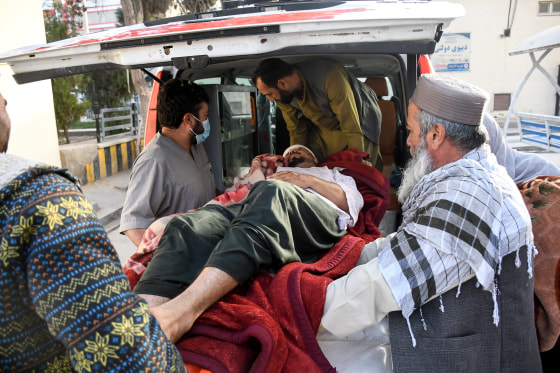
According to the Taliban-run health ministry at least twenty people are dead and more than three hundred injured. Houses have fallen. Hospitals are full. Some doctors are working outside because there’s no room inside. They expect the number of deaths to rise once they reach the outer districts.
People filmed the tremors on their phones - buildings swaying, dust clouds rising, children crying. It felt like the quakes that hit the west last year.
Rescue workers are driving toward the epicentre. Helicopters are few and weather is bad. Roads are damaged, but aid trucks are moving for tents, food and blankets. One local official said they still can’t reach some villages near Dehdadi.
Northern Afghanistan sits on several active fault lines. The crust beneath the Hindu Kush pushes and folds almost constantly, making the region one of the world’s most earthquake-prone zones. While quakes are frequent, this one was unusually shallow barely 10 kilometres deep - amplifying its force at the surface.
Residents described a single violent jolt followed by two shorter tremors. In Mazar-e-Sharif, walls cracked in government offices and parts of the city’s historic, blue-tiled mosque were cordoned off for inspection. “The vibration felt like a train passing underneath the floor,” said Ahmad Rahimi, a shopkeeper who rushed outside with his neighbours. “Everyone kept shouting verses of prayer.”
Doctors at the city’s main hospital said most patients arrived with fractures, head injuries, and shock. Volunteer groups helped move the wounded on motorbikes when ambulances couldn’t get through blocked lanes. “We have not seen something this sudden in years,” a senior nurse said. “The hardest part is identifying those still missing.”
In several rural clinics, staff treated the injured under tents. International aid agencies have offered assistance, but coordination remains complicated under sanctions and funding limits. A UN statement called the situation “urgent but manageable if access continues.”
Even after the tremors stopped, fear lingered. Families spent the night outside in open fields, lighting small fires against the cold. Many refused to re-enter their homes, fearing collapse from hidden cracks. “It felt like the ground wanted to swallow us,” said Mariam Khalil, who lives near the outskirts of the city. Her house survived, but one wall now leans dangerously.
Relief workers reported children crying through the night and livestock roaming freely after fences fell. With winter weeks away, displaced families are asking for shelter more than food.
The Taliban government has ordered emergency repairs and appealed for international help. Acting spokesman Zabihullah Mujahid said teams from several provinces were being mobilised to assess damage. Neighbouring countries have expressed condolences, and Pakistan’s foreign ministry said medical supplies would be flown in if air corridors reopen soon.
The Afghanistan earthquake has drawn renewed attention to the country’s fragile infrastructure. Years of conflict and limited investment have left even major cities vulnerable. Schools and hospitals often lack seismic safety standards, and rescue capacity outside Kabul is minimal.
For Afghans, earthquakes are an old terror that keeps returning. Just last year, thousands died in Herat and Paktika provinces. Each event exposes how little has changed. Local engineers note that inexpensive clay-brick construction, common across rural areas, turns deadly when the ground moves. Education campaigns exist, but rebuilding stronger costs money most families don’t have.
Still, people rebuild. In Mazar-e-Sharif’s old quarters, residents swept broken glass before reopening small shops by afternoon. “Life doesn’t stop here,” said one tea seller, pouring cups for rescue volunteers. “Even if the earth shakes, we get back to work.”
Experts from Afghanistan’s meteorological department said more aftershocks could follow in the coming days. They urged residents to stay in open areas and avoid damaged structures. Radio announcements through the night warned citizens not to use open flames near gas leaks or fallen power lines.
The quake’s timing early morning when most families were indoors may have limited casualties, since schools and offices were not yet full. But officials admit the true Afghanistan earthquake death toll will only emerge after surveys reach outlying villages. Aid groups are pressing for better mapping of fault-line zones so relief can arrive faster next time.
As The United Indian looks across a nation once again balancing grief and endurance, the tragedy in Mazar-e-Sharif underscores a cruel pattern: nature’s tremors strike hardest where recovery is slowest. For the families burying their dead, statistics mean little. They are left with cracked homes, quiet streets, and the heavy silence that follows disaster.
The Afghanistan earthquake has reminded the world of a country still caught between instability and resilience, where survival itself has become an act of faith.
Everything you need to know
No mystery really. It’s the same restless ground that sits under northern Afghanistan. Plates keep pushing, the Hindu Kush shakes, and every few years the earth reminds people who’s in charge. This time the 6.3-magnitude jolt tore through villages before dawn.
Mostly around Mazar-e-Sharif. Mud houses folded like paper, power lines snapped, streets filled with dust. The old city took the heaviest hit; the countryside is still being counted.
Officials talk of twenty dead, more than three hundred hurt, but numbers in Afghanistan move slowly. The real Afghanistan earthquake death toll will surface when roads clear and rescuers reach the hills.
Neighbours first. They pulled survivors out before the machines arrived. Later the health ministry sent trucks from Kabul. A few aid groups pitched tents and handed out bread. It’s not enough, but it’s something.
Too often. These Afghanistan earthquakes roll through the Hindu Kush almost every year. Some pass unnoticed; others, like this one, leave towns in mourning. People rebuild, because there’s nowhere else to go.


Oct 03, 2026
TUI Staff
Oct 03, 2026
TUI Staff
Oct 03, 2026
TUI Staff
Oct 03, 2026
TUI Staff
Oct 03, 2026
TUI Staff
Oct 03, 2026
TUI Staff
Oct 03, 2026
TUI Staff
Oct 03, 2026
TUI Staff

Stay informed with independent, fact-checked journalism on technology, environment, government, economy and more. India’s most trusted digital news platform.


Comments (0)
Be the first to comment!