
Delhi Blast Mystery: What Does the CCTV Footage Reveal Near the Red Fort in Delhi?
City on Alert
 IN
Sun, Aug 23, 2026 | 02:04 PM IST
IN
Sun, Aug 23, 2026 | 02:04 PM IST

The capital woke up to high alert on Friday after an explosion near Red Fort in Delhi triggered panic and set off one of the city’s largest security searches in months. Early morning footage recovered from multiple cameras in the area has now become the centrepiece of the probe- clips that show a suspect’s vehicle entering and exiting the restricted zone shortly before and after the blast.
Police teams have fanned out across central Delhi, scanning more than a hundred hours of CCTV footage from roads, petrol pumps, parking lots, and traffic intersections to trace the vehicle’s movement. Sources said the clips were recorded between 5:30 p.m. and 6:15 p.m., a period that coincides with the initial sound of the explosion reported by residents nearby.
The Delhi blast occurred near a service lane that connects Netaji Subhash Marg to the northern wall of the Red Fort complex. While there were no casualties, the impact damaged a small portion of a roadside barricade and shattered windows of a passing autorickshaw.
Police received the first emergency call at 6:21 p.m. Within minutes, fire tenders, bomb disposal squads, and sniffer units arrived at the scene. The area was cordoned off, traffic diverted, and all public movement restricted for over two hours.
“Initial assessment suggests the use of low intensity improvised material,” said an officer from the forensic science laboratory, which is analysing samples collected from the blast site.
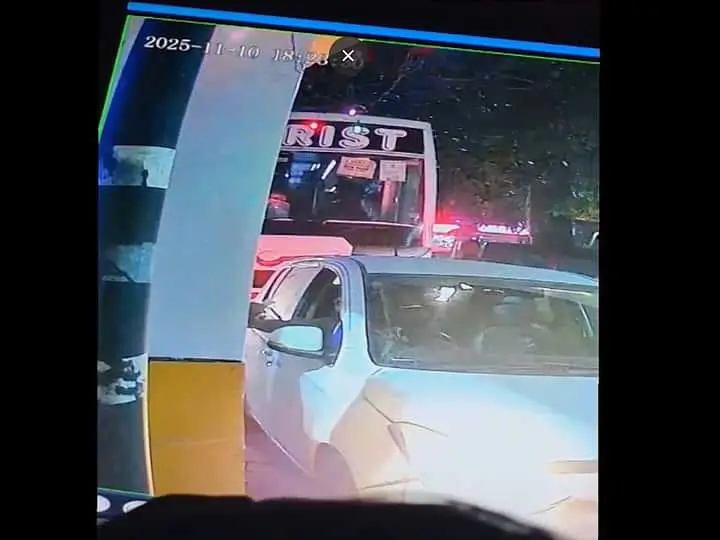
Investigators say the CCTV footage could hold the key to solving the case. Clips from at least 15 cameras show a white hatchback entering the restricted stretch moments before the blast. The same car was later spotted exiting from a different route near Daryaganj.
A senior police officer confirmed that the number plate was partially visible but blurred. “We’ve sent the footage to the forensic science laboratory for image enhancement,” he said. “There’s a distinct pattern in the car’s movement - a deliberate loop through the Red Fort zone and then a quick escape.”
Multiple agencies, including the National Investigation Agency (NIA), have joined the probe. The NIA team visited the site on Friday afternoon, collecting debris samples and electronic evidence. They are also examining phone tower dumps from nearby areas to track possible mobile connections to the location.
The Red Fort in Delhi is one of the most heavily monitored heritage zones in the capital, especially after Independence Day. More than 250 cameras, motion sensors, and checkpoints operate daily under joint supervision of Delhi Police and the Archaeological Survey of India.
Security officials admit that the breach raises serious questions. “No unauthorised vehicle should have entered that early without detection,” said a retired officer who previously served in the Central District. “Either a local access card was misused or the vehicle used cloned plates.”
The NIA and Delhi Police Crime Branch are coordinating to identify all authorised vehicles that entered the Red Fort perimeter in the past 48 hours. Parking records from nearby hotels and markets are also being verified.
The forensic science laboratory has sent preliminary observations to investigators. Early signs indicate a chemical compound consistent with potassium nitrate and Sulphur based accelerants materials often used in low-grade explosive devices. No timer or triggering device was recovered, leading experts to suspect manual detonation.
Officials said the damage radius was less than five metres, suggesting the blast was intended as a signal or warning rather than a mass-casualty attempt. However, investigators haven’t ruled out a test run for a larger operation.
Following the Delhi blast, checkpoints were reinforced around major government buildings, railway stations, and tourist landmarks. Patrol units have been told to maintain “stop and verify” checks on vehicles carrying pressure cookers, gas cylinders, or chemical canisters.
Residents in the Red Fort area said police teams were seen knocking on doors and asking for access to private camera systems. “They were polite but thorough,” said a shopkeeper near Jama Masjid. “They asked for DVR backups from the last three days.”
The NIA’s arrival has lent urgency to the investigation. Late Friday evening, the agency’s explosives experts carried out a controlled detonation test in a nearby empty plot to compare sound patterns and pressure signatures.
Officials said more details are expected once video enhancement is complete. “It’s a painstaking job, frame by frame,” said an officer. “We’re trying to trace where the car went next towards Delhi Gate or out through Kashmere Gate.”
The National Investigation Agency has taken over the digital evidence analysis to ensure no trace is missed. While Delhi Police will continue handling ground leads, the NIA will focus on potential cross-border or organised network links.
An official briefed on the probe said the agency is exploring whether similar material was used in previous incidents reported in Uttar Pradesh or Haryana. “So far, there’s no indication of a terror module, but we can’t assume anything yet,” he said.
Locals around Red Fort said the explosion was loud enough to be mistaken for a tyre burst at first. “Then we saw smoke,” said Abdul Qadir, who runs a tea stall nearby. “The police came in within minutes.”
Tourists, meanwhile, were evacuated and escorted to safety. Foreign visitors staying in nearby hotels were advised to remain indoors until security clearance was given.
As The United Indian observes, the Delhi blast may not have caused large-scale damage, but it has reopened deep questions about urban security and surveillance reliability. The CCTV footage that now drives the investigation is a reminder that technology is both a witness and a warning system.
Every frame being examined tells part of a larger story of how one vehicle managed to slip through India’s most guarded zone, and how a city on alert still lives one breath away from uncertainty.
For Delhi’s residents, the echo of that blast fades quickly, but the questions it leaves behind will linger far longer than the smoke.
Everything you need to know
People in the area remember hearing a single, heavy blast not a series, just one loud boom that shook shop windows. A car parked close to Subhash Marg went up in flames. Police and fire crews were on the scene within minutes. Nobody’s calling it an accident now, but investigators are still putting the pieces together.
Experts from the forensic science laboratory picked up bits of metal and soil samples early Saturday morning. Nothing explosive in a big way it looks like a crude device, possibly meant to scare, not destroy.
Police presence has doubled. Barricades are tighter, and checking has become more frequent. Locals say things look normal again, but there’s still a sense of unease hanging over the old walls of the Red Fort in Delhi.
Because the Red Fort in Delhi isn’t just another monument. It’s where the Independence Day flag goes up every year, watched by the whole country. A blast so close to it rattles more than the windows it shakes confidence. Security agencies treat even a small incident there as a national-level alert.
Yes. Police sources say a white car was caught on CCTV footage near the site, driving in and out just before the blast. Teams are now checking every camera in nearby lanes to trace where it went next.


Aug 21, 2026
TUI Staff
Aug 21, 2026
TUI Staff
Aug 21, 2026
TUI Staff
Aug 21, 2026
TUI Staff
Aug 21, 2026
TUI Staff
Aug 21, 2026
TUI Staff
Aug 21, 2026
TUI Staff

Stay informed with independent, fact-checked journalism on technology, environment, government, economy and more. India’s most trusted digital news platform.


Comments (0)
Be the first to comment!