
Kantara Chapter 1 Roars: Rishab Shetty’s Unbelievable Journey From Empty Halls to Full Houses
Struggle to Stardom
 IN
Fri, Sep 04, 2026 | 09:35 PM IST
IN
Fri, Sep 04, 2026 | 09:35 PM IST

Every once in a while, the film industry throws up a story that feels almost scripted. For Rishab Shetty, that story is his own. Today, he is the man behind the roaring success of Kantara Chapter 1. But not too long ago, he was the director-actor who couldn’t convince exhibitors to give his movie even a single show.
The way Kantara Chapter 1 opened - packed houses, record-breaking advance bookings, fans chanting his name outside theatres - it feels like a dream. And Shetty himself admits it: “There was a time when I went from theatre to theatre, asking for just one screen. Today, people are lining up before dawn.”
That shift is more than a personal victory. It’s a reminder of what faith in storytelling, rooted in culture, can achieve.
Before the world started calling him the “man of Kantara,” Rishab Shetty was just another filmmaker trying to get noticed. He had talent, yes, but talent doesn’t guarantee shows in an industry driven by stars and big studios.
In interviews, he recalls walking into cinema halls with folded hands, asking theatre owners to screen his earlier films. Some did, some refused, and many simply ignored him. That’s the part audiences don’t see - the grind before the glory.
Which is why the massive response to Kantara Chapter 1 means so much. It isn’t just about numbers at the box office; it’s proof that the very audiences who once ignored his work now believe in his vision.
The name itself Kantara has now become synonymous with a cultural movement. The first part blended folklore, mythology, and human conflict in a way that few Kannada films had attempted. Audiences across India connected to it, not because it was loud or glamorous, but because it felt authentic.
So when Kantara Chapter 1 was announced, expectations skyrocketed. Could Shetty pull it off again? The answer came in the form of opening-day madness: sold-out multiplexes in cities, single screens echoing with whistles, and hashtags trending nationwide.
For Shetty, this was more than a sequel. It was an origin story, both for the film’s mythos and for his own journey as a filmmaker.
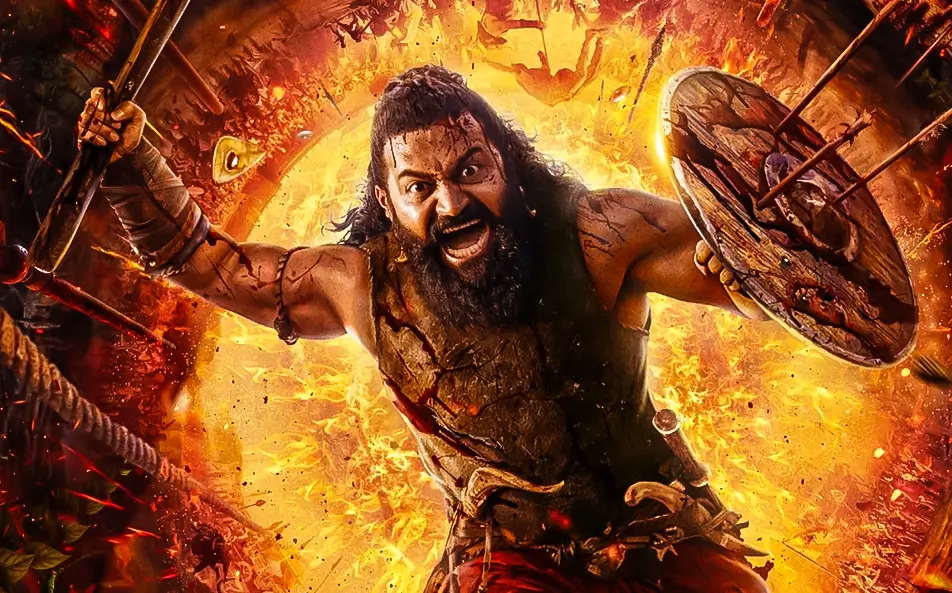
In his own words, the moment feels surreal. “There was a time when I couldn’t sell even one ticket,” he said in a recent interaction. “And now, people are queuing for hours. It reminds me that cinema is not just entertainment; it’s faith, culture, and emotion.”
It’s rare for a director-actor to pull this kind of dual role so seamlessly. But Rishab Shetty has become the face of Kantara Chapter 1 in more ways than one. His involvement in the story, the screenplay, and even the smallest creative decisions makes the film feel deeply personal.
Fans see it too. Many call him a “one-man army,” someone who carries not just a film but an entire cultural identity into mainstream cinema.
The most fascinating part of this journey is how rooted it remains in local soil. Unlike many pan-India projects that chase gloss, Kantara and now Kantara Chapter 1 thrive because they celebrate their roots. They don’t dilute language or culture to appeal to everyone - and yet, they end up appealing to everyone.
In smaller towns, people relate to the traditions shown on screen. In metros, audiences treat it like a window into a world they rarely see. Abroad, NRIs watch it with pride, pointing at the screen and saying, “This is our culture.”
For Shetty, who once counted pennies to promote his films, the global buzz around Kantara Chapter 1 is both overwhelming and validating.
When people talk about the kantara movie budget, they often compare it to the behemoths from Bollywood or Telugu cinema. By those standards, Shetty’s films are modest. But that’s where his strength lies - stretching every rupee to deliver something that feels ten times bigger on screen.
Industry insiders point out that the returns on Kantara Chapter 1 are already massive compared to its cost. For audiences, this only adds to the narrative: a man who once struggled for screens now creates blockbusters without the crutches of mega-budgets.
Looking back, the phrase Rishab Shetty Kantara feels like it will be written into cinema history. Not as a fluke, but as a case study in persistence and authenticity.
Shetty didn’t just make a film; he created a cultural conversation. He reminded mainstream audiences that stories rooted in folklore, told with sincerity, can outshine the most polished commercial scripts.
That’s why Kantara Chapter 1 feels bigger than a sequel. It feels like a movement, carrying forward the story of a filmmaker who believed when no one else did.
What makes people clap, whistle, and cry at a film like this? It isn’t just spectacle. It’s recognition. Audiences see their own stories, their own traditions, reflected on the big screen.
And when Rishab Shetty says he once begged for one show, it strikes a chord. Because who hasn’t felt overlooked at some point? His victory feels like a collective one, a reminder that perseverance and a bit of faith - can rewrite destiny.
At The United Indian, we see this moment not just as a film story but as a symbol. Rishab Shetty’s rise through Kantara and now Kantara Chapter 1 shows how deeply personal stories can connect a nation. His success isn’t only about numbers; it’s about cultural pride, resilience, and the return of faith in storytelling.
When the curtains fall on Kantara Chapter 1 shows across India, one truth lingers: cinema is at its most powerful when it is honest. Rishab Shetty’s honesty - in craft, in culture, in conviction has carried him from empty theatres to overflowing ones.
And as fans cheer the film’s bumper opening, they’re also cheering a journey. From rejection to acceptance, from local folklore to national headlines, from asking for one screen to commanding thousands - Shetty’s story has only just begun.
On The United Indian page, we celebrate the rise of Kantara Chapter 1. Rishab Shetty’s success reminds us that the strongest films are those rooted in tradition and truth.
1. Who plays Rishab Shetty in Kantara Chapter 1?
It’s Rishab Shetty himself leading the story, backed by Rukmini Vasanth, Gulshan Devaiah, Jayaram, and Rakesh Poojari. Produced by Hombale Films, the movie blends folklore with big-screen visuals - and fans are already curious about its box office buzz and budget.
2. Is Rishab Shetty preparing for Kantara Chapter 1?
He’s already in the thick of it. Rishab Shetty has his eyes set on Kantara Chapter 1, the prequel to the 2022 hit that made him a household name. Once the film is out, he plans to sit down with director Prasanth Varma, check calendars, and figure out when the next leg of work begins.
3. When is Kantara 2 releasing?
The wait won’t be forever. October 2, 2025 - that’s the day Kantara 2 lands in theatres. And yes, it’s still Rishab Shetty at the wheel, acting and directing like last time. People are already talking about it like a festival date, not just another Friday release.
4. Who starred in Kantara: A Legend Chapter 1?
The prequel brings Rishab Shetty back at the centre - not just acting, but directing too. Alongside him, you’ll spot familiar faces like Sapthami Gowda and Achyuth Kumar, plus a few others who add weight to the story. Backing it all is Hombale Films, with Vijay Kiragandur producing, which means the scale and finish are exactly what fans expect after the 2022 blockbuster.
5. Will there be a sequel to Kantara Chapter 1?
While nothing is officially announced, the success has sparked speculation that a Chapter 2 or expansion of the Kantara universe is likely.
Everything you need to know
It’s Rishab Shetty himself leading the story, backed by Rukmini Vasanth, Gulshan Devaiah, Jayaram, and Rakesh Poojari. Produced by Hombale Films, the movie blends folklore with big-screen visuals - and fans are already curious about its box office buzz and budget.
He’s already in the thick of it. Rishab Shetty has his eyes set on Kantara Chapter 1, the prequel to the 2022 hit that made him a household name. Once the film is out, he plans to sit down with director Prasanth Varma, check calendars, and figure out when the next leg of work begins.
The wait won’t be forever. October 2, 2025 - that’s the day Kantara 2 lands in theatres. And yes, it’s still Rishab Shetty at the wheel, acting and directing like last time. People are already talking about it like a festival date, not just another Friday release.
The prequel brings Rishab Shetty back at the centre - not just acting, but directing too. Alongside him, you’ll spot familiar faces like Sapthami Gowda and Achyuth Kumar, plus a few others who add weight to the story. Backing it all is Hombale Films, with Vijay Kiragandur producing, which means the scale and finish are exactly what fans expect after the 2022 blockbuster.
While nothing is officially announced, the success has sparked speculation that a Chapter 2 or expansion of the Kantara universe is likely.


Sep 04, 2026
TUI Staff
Sep 04, 2026
TUI Staff
Sep 02, 2026
TUI Staff
Sep 02, 2026
TUI Staff
Sep 04, 2026
TUI Staff
Sep 03, 2026
TUI Staff
Sep 03, 2026
TUI Staff

Stay informed with independent, fact-checked journalism on technology, environment, government, economy and more. India’s most trusted digital news platform.


Comments (0)
Be the first to comment!