
Supreme Court Questions Governors’ Delays: How Long Can State Bills Be Held Without Action?
Clarity in Governance
 IN
Fri, Jun 26, 2026 | 06:17 AM IST
IN
Fri, Jun 26, 2026 | 06:17 AM IST

Every once in a while, a judgment comes along that doesn’t just settle a legal doubt-it quietly nudges an entire system back into rhythm. India saw one such moment recently when the Supreme Court stepped in to address a question that has been bothering several states: Can a Governor simply sit on a bill forever?
For years now, this question has floated around the edges of political debates. Whenever a state government complained that its bills were stuck at Raj Bhavan, the issue would flare up for a moment and then slide away without clear resolution. Governors, after all, hold constitutional authority-but so do elected assemblies. And when these powers collide, confusion follows.
This time, the Court decided not to let it linger.
At the heart of the dispute lies a simple idea: the democratic chain cannot afford a broken link. When a bill has travelled through debates, committee reviews, amendments, and a full House vote, an indefinite pause at the Governor’s desk essentially holds the entire system hostage. And that is exactly what the Court has now pushed back against.
The case didn’t come out of nowhere. It grew from repeated complaints-different states, different political parties, but the same grievance: Bills were being kept pending without any movement at all. There were instances where governments waited months just to know whether a bill had been approved, rejected, or sent back.
The situation became murky enough that the Supreme Court was asked to settle the matter, not in a political sense but in a constitutional one. And the Court’s tone was unmistakably firm. Governors, the judges said, are constitutional authorities, not political players. Their silence cannot replace their responsibility.
The Court pointed out the options available to a Governor are clear—assent, return for reconsideration, or reserve for the President’s approval. But “parking” a bill indefinitely is not one of those options. Doing so, they observed, only weakens the democratic structure the Constitution tries so hard to protect.
In some states, crucial legislation was held up for months on end. Administrative plans were delayed. Implementation teams were left waiting. Public welfare decisions already sluggish were slowed even more. Behind every stuck bill were citizens waiting for change but receiving bureaucratic limbo instead.
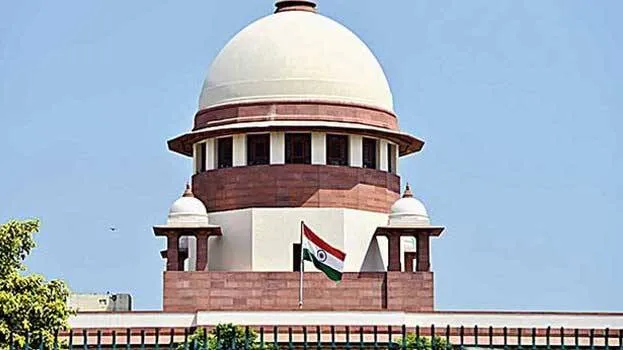
For many, this ruling is not just about a constitutional checkpoint-it’s a relief. Assemblies often carry the weight of public expectation, and the functioning of state legislatures depends heavily on the predictable movement of bills. A stalled bill is not just a political inconvenience; it interrupts governance.
Now, with clarity from the Court, state governments have a clearer path. Bills cannot be kept in silence. They must be acted upon-one way or another. Even when a Governor disagrees, the Constitution gives them only one chance to return the bill. After that, the elected majority prevails.
This decision gently restores the balance that seems to wobble every now and then in India’s federal framework. It respects both sides-state governments and the Governor’s office-but also draws a boundary that protects democratic flow.
Many observers believe this ruling will also ease political tensions that have become routine in several states. The constant back-and-forth between Raj Bhavans and state secretariats has often slowed down governance far more than it should. Hopefully, this judgment will cool some of that friction.
What makes this ruling particularly significant is its tone. Beyond legal precision, it carries a kind of gentle reminder: constitutional offices come with responsibility, not limitless discretion.
The Governor’s role has always been unusual-unelected yet empowered, symbolic yet structural. The Court has now reminded everyone that this role must complement democracy, not suspend it.
This isn’t a judgment meant to ignite controversy. If anything, it is designed to stop controversies from escalating. The Court stepped in not to take sides, but to realign the system with the original intent of the Constitution.
For citizens, the biggest impact may simply be smoother functioning. Delayed bills affect everything-from public schemes to administrative reforms. And when governance works faster and cleaner, everyone benefits.
In many ways, the judgment may help close a loophole that was never intended to exist. It makes it harder for any Governor-present or future-to stall legislation without explanation. It strengthens transparency. And, perhaps most importantly, it ensures that the mandate of the people, expressed through their elected representatives, continues to move forward.
At The United Indian, we believe decisions like this quietly strengthen the backbone of democracy. When bills move without unnecessary delays, governance improves. When constitutional roles become clearer, political friction drops. And when people can trust the process, they can trust democracy a little more. This ruling isn’t just a legal guideline-it’s a reassurance that every arm of governance must work together, not against one another.
Everything you need to know
The Court said a Governor cannot keep a bill pending endlessly. They must either approve it, send it back once, or forward it to the President-but they cannot remain silent.
Not directly. They can return it once with recommendations. But if the Assembly passes it again, they are expected to give assent.
Mostly due to political disagreements or hesitation at the Raj Bhavan. This ruling now puts boundaries around such delays.
Laws will move faster. Projects depending on new legislation can start sooner. Bureaucratic uncertainty will reduce.
Not really. It simply defines it more clearly. The ruling ensures Governors act within constitutional limits, not outside them.


Jun 25, 2026
TUI Staff
Jun 25, 2026
TUI Staff
Jun 24, 2026
TUI Staff
Jun 20, 2026
TUI Staff
Jun 25, 2026
TUI Staff
Jun 25, 2026
TUI Staff
Jun 24, 2026
TUI Staff
Jun 20, 2026
TUI Staff

Stay informed with independent, fact-checked journalism on technology, environment, government, economy and more. India’s most trusted digital news platform.


Comments (0)
Be the first to comment!