
BMC Election 2026: What’s at Stake for Mumbai’s Power Centres as Political Heavyweights Battle It Out…
Power Begins Local
 IN
Thu, Oct 15, 2026 | 11:27 PM IST
IN
Thu, Oct 15, 2026 | 11:27 PM IST

Mumbai’s civic body isn’t just another municipal office. It manages one of the largest city budgets in Asia, makes decisions that affect millions of people every day, and has often been a steppingstone to power at the state level. daily governance for millions and often serves as a political launchpad for state-level influence.
As the city moves closer to its long-delayed civic polls, the stakes have grown far beyond ward boundaries. Control of the Brihanmumbai Municipal Corporation has become a symbol of political credibility, organisational strength, and voter confidence in Maharashtra’s most influential city.
The upcoming BMC election is therefore being watched as closely as a state election - if not more.
The BMC’s annual budget rivals that of several Indian states. Decisions taken here affect infrastructure, health services, roads, housing approvals, and disaster management.
Historically, parties that dominate Mumbai’s civic governance gain a strong organizational backbone, financial control, and visibility that translates into wider electoral success. Losing the BMC has often meant losing momentum across the state.
This explains why no major political formation is treating the polls as routine local governance.
For the BJP-led government in Maharashtra, the civic elections are more than a routine local contest. They offer a chance to lock in the party’s growing hold over urban Maharashtra especially Mumbai. Chief Minister Devendra Fadnavis is under pressure to show that the BJP’s influence isn’t limited to the state assembly but extends into the day-to-day running of India’s financial capital.
A strong showing in Mumbai would underline that message. It would suggest the party has both administrative control and the confidence of urban voters. A poor result, however, could unsettle that narrative and raise awkward questions as future state and national elections draw closer.
For the Shiv Sena, Mumbai has always been more than just another city. For decades, it formed the heart of the party’s identity and power. Control of the BMC wasn’t only about civic administration - it was about visibility, influence, and presence on the city’s streets.
Today, the civic polls have become a fight for relevance. Losing more ground in Mumbai could further weaken the party’s organisational base. Regaining influence, on the other hand, would signal that the Sena still has life - and a future.
For Uddhav Thackeray, the election carries both political and personal weight. Once the undisputed face of Mumbai’s dominant party, he is now facing a basic question: does his leadership still connect with the city’s voters?
A strong civic performance would help re-establish him as a serious political force. A disappointing result, however, would leave him with less leverage in Maharashtra’s fractured and competitive political landscape.
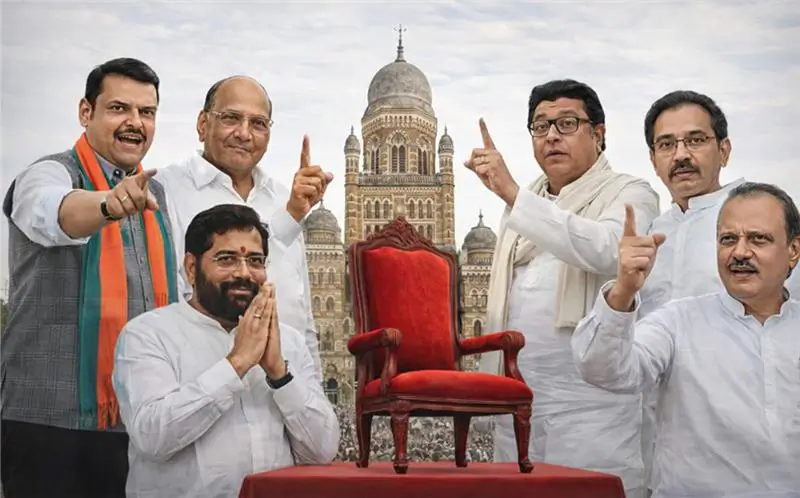
City voters often sense political change before it shows up elsewhere, and Mumbai is a good example of that. The city’s electorate is varied, ambitious, and far more concerned with how well things work than with political ideology.
Issues that affect daily life - broken roads, monsoon flooding, access to hospitals, delays in housing approvals - matter just as much as party loyalty. That practical mindset makes Mumbai’s civic election tightly contested, hard to predict, and closely watched far beyond the city.
Unlike earlier years when one party enjoyed near-total dominance, the current political field is fractured. Multiple alliances, internal splits, and overlapping voter bases make outcomes harder to predict.
Smaller parties and independents could play spoiler roles in closely fought wards, affecting overall control of the civic body.
Beyond headlines, control of the BMC allows parties to influence policy at the grassroots level. Appointments, project clearances, and ward-level development shape political goodwill over time.
Civic governance also offers visibility - leaders who perform well locally often emerge as strong state-level contenders.
Across the country, city elections are no longer low-profile affairs. As India’s cities grow, local governments are being pulled into the centre of political debate. What happens at the municipal level now has a direct impact on everyday life, making civic polls far more important than they once were.
Mumbai’s election is part of this larger shift. Cities are no longer treated as administrative footnotes - they have become serious political battlegrounds.
Mumbai’s voters are likely to look past slogans and focus on results. Problems like monsoon flooding, stalled infrastructure projects, and gaps in public healthcare are still fresh in people’s minds.
In this climate, candidates who can show they understand governance and can actually deliver - may have an edge over those relying mainly on history, identity, or political legacy.
The outcome will shape not just Mumbai’s administration but Maharashtra’s political narrative. A decisive victory could reset alliances, strengthen leadership claims, and influence future electoral strategies.
The second and final mention of the bmc election underlines this reality: the civic verdict will echo far beyond city limits.
Ultimately, this is not just about who controls a municipal body. It is about who commands Mumbai’s political imagination at a time when urban governance defines political success.
As parties prepare for battle, voters will decide not just leadership, but direction.
Civic elections touch people’s lives in very direct ways. When voters understand what’s really on the line, it becomes clear that decisions made in their neighbourhoods don’t stop there - they go on to shape politics at the state and national level as well.
Everything you need to know
Because the BMC doesn’t just manage roads and drains. It controls enormous resources and shapes daily life in India’s financial capital. Who runs it often ends up influencing politics far beyond the city.
It’s both. While voters care about flooding, transport, and housing, political parties see the result as a test of strength, relevance, and public mood across Maharashtra.
A win in Mumbai strengthens authority within parties. A loss raises uncomfortable questions. For leaders, the result can either steady their position or expose cracks.
Mumbai voters tend to be impatient with poor services and quick to shift loyalties. They often judge parties less by ideology and more by whether the city feels better managed.
Then the story doesn’t end on counting day. Negotiations, adjustments, and power-sharing talks can decide who actually governs the city, sometimes reshaping alliances in unexpected ways.


Oct 14, 2026
TUI Staff
Oct 08, 2026
TUI Staff
Oct 06, 2026
TUI Staff
Oct 15, 2026
TUI Staff
Oct 15, 2026
TUI Staff
Oct 15, 2026
TUI Staff
Oct 14, 2026
TUI Staff

Stay informed with independent, fact-checked journalism on technology, environment, government, economy and more. India’s most trusted digital news platform.


Comments (0)
Be the first to comment!