
Will India Face a 500% Tariff? Trump Signals Support for Bill Targeting Russian Oil Buyers
Trade Meets Politics
 IN
Sun, Oct 18, 2026 | 12:57 PM IST
IN
Sun, Oct 18, 2026 | 12:57 PM IST

A proposed US bill threatening unprecedented trade penalties has sparked concern across global capitals, particularly in New Delhi. The legislation, backed by senior American lawmakers and reportedly favoured by Donald Trump, would allow Washington to impose severe tariffs on countries continuing to buy discounted energy from Moscow. At the centre of the debate is a blunt message: economic pressure will be used to enforce geopolitical alignment.
The proposal gained attention after US Senator Lindsey Graham said the bill would give Trump the authority to “punish countries” that benefit from cheap Russian energy while the war in Ukraine continues. While the bill is still under discussion, Trump’s reported support has elevated it from a symbolic threat to a potentially serious policy tool.
The legislation is framed as an extension of existing US sanctions on russia, but its reach is wider. Instead of focusing only on Russian entities, it allows action against third countries that maintain energy trade with Moscow.
Supporters argue that current measures have failed to fully choke off revenue streams. This bill, they say, would close that gap by raising the economic cost for buyers.
Opponents see something more troubling. They warn that such laws turn trade into a weapon, one that could easily be turned on allies as well as adversaries.
At this stage, the bill remains a proposal. But the language gives future administrations broad authority.
Energy sits at the heart of the debate. Since the start of the Ukraine war, Russian crude has been sold at discounted rates, making Russian oil attractive to countries seeking to manage inflation and energy security. For importing nations, the decision has often been driven by economics rather than politics.
The bill challenges that logic. It signals that economic pragmatism will no longer be treated as neutral ground, and that continued energy trade with Moscow could come at a significant cost.
The legislation has been championed by Senator Lindsey Graham, a long-time advocate of hardline measures against Moscow. His position, shaped by years of involvement in lindsey graham ukraine policy debates, reflects frustration with what he sees as loopholes in the global sanctions framework.
By empowering the US president to act against third countries, Graham argues the bill would close those gaps. The goal, he says, is not just to weaken Russia’s economy, but to force a clearer choice on nations that have tried to balance relations on both sides.
Trump’s reported support for the bill fits neatly into his broader worldview on trade and power. Throughout his presidency, he treated tariffs not just as economic tools, but as instruments of leverage. Whether it was us tariffs on china during the trade war or pressure tactics elsewhere, Trump has consistently argued that economic pain can drive political change.
The proposed bill extends that logic into the realm of sanctions enforcement. Rather than relying solely on diplomacy, it uses market access as a bargaining chip, reinforcing Trump’s belief that economic strength should translate into political influence.
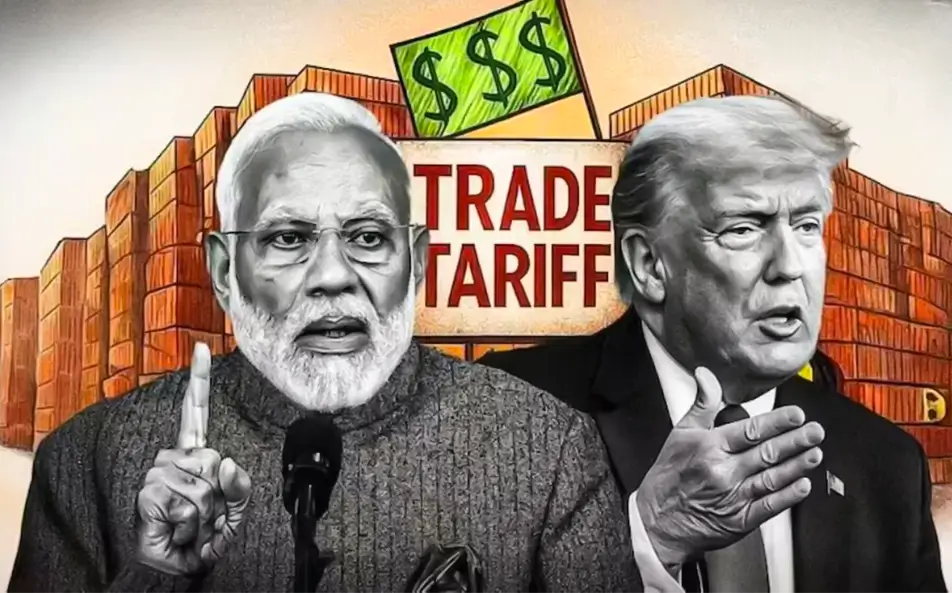
For India, the bill raises uncomfortable questions. New Delhi has maintained that its energy purchases are guided by national interest and affordability, particularly during periods of global volatility. However, the legislation directly targets countries engaged in russian oil imports india, placing India among those potentially exposed.
Trade experts warn that such measures could complicate relations at a time when cooperation with Washington spans defence, technology, and regional security. The prospect of additional us tariffs on india would add economic strain to an already complex relationship.
The bill has revived a broader debate about the limits of sanctions. While supporters see them as necessary tools to uphold international norms, critics argue that forcing countries to align through economic punishment undermines sovereignty.
There is also concern about precedent. If major powers begin penalising third countries for lawful trade decisions, the global trading system risks becoming increasingly fragmented. What begins as a response to one conflict could reshape how economic pressure is used more widely.
Beyond India, the bill has drawn attention from other energy-importing nations. Some fear that today’s focus on Russian energy could tomorrow extend to other geopolitical disputes. The memory of us tariffs on china has made many governments wary of how quickly trade measures can escalate.
Markets, too, are watching closely. Any move that disrupts energy flows or adds uncertainty to trade relationships can have knock-on effects far beyond the countries directly targeted.
From Washington’s perspective, the bill complements existing trump russia sanctions by tightening the net around Moscow’s revenue streams. The hope is that cutting off alternative buyers will amplify economic pressure and shorten the conflict.
Whether that strategy works remains uncertain. Sanctions have historically produced mixed results, often hurting civilian populations while entrenching political positions. Adding third-country penalties introduces new risks and diplomatic costs.
The bill must still move through Congress, where debate, amendments, and political calculations will shape its future. Trump’s support gives it visibility, not certainty.
For India, the challenge will be careful engagement - defending economic interests while managing relations with Washington.
The second and final reference to the 500% tariff proposal underscores the stakes involved. What began as a legislative idea has already become a signal of how energy, trade, and geopolitics are colliding.
The United Indian tracks international politics, trade pressures, and energy diplomacy to help readers understand how global decisions impact national interests.
Everything you need to know
The bill aims to pressure countries that continue buying cheap Russian oil by threatening them with heavy trade penalties. Supporters believe this would tighten economic pressure on Russia, while critics say it could drag other countries into a conflict, they are not directly part of.
India has increased its purchases of discounted Russian oil since the Ukraine war began. While New Delhi says these decisions are based on energy security and affordability, the proposed bill treats such purchases as something that should be discouraged through trade penalties.
Trump has indicated that he is in favour of the idea behind the bill, especially the use of strong economic tools to influence global behaviour. However, backing a bill and implementing it are different steps, and much would still depend on political and legal processes.
Potentially, yes. If major economies begin using extreme tariffs as pressure tools, it could disrupt trade flows, raise costs for businesses, and eventually affect prices for consumers. Energy and trade decisions tend to ripple through the economy.
That remains uncertain. History shows that sanctions and trade threats sometimes increase pressure, but they can also harden positions and push countries to seek alternative partners. Much depends on how coordinated and sustained such measures are.


Oct 17, 2026
TUI Staff
Oct 17, 2026
TUI Staff
Oct 15, 2026
TUI Staff
Oct 17, 2026
TUI Staff
Oct 17, 2026
TUI Staff
Oct 15, 2026
TUI Staff
Oct 15, 2026
TUI Staff

Stay informed with independent, fact-checked journalism on technology, environment, government, economy and more. India’s most trusted digital news platform.


Comments (0)
Be the first to comment!