
Climate Change in India: 2025 Was a Year of Clean Energy Wins and Climate Warnings
Progress Under Pressure
 IN
Sun, Sep 20, 2026 | 10:48 AM IST
IN
Sun, Sep 20, 2026 | 10:48 AM IST

In 2025, India’s climate story unfolded in two sharply different directions. On one hand, the country crossed a historic clean-energy milestone, moving faster than many expected. On the other, extreme heat, polluted air and water stress affected daily life for millions.
To understand what this year really meant, it helps to look closely at the data - not in isolation, but alongside lived experience. That contrast explains the state of Climate Change in India better than any single headline.
|
Category |
Cumulative Installed Capacity (GW) |
% Share of Total RE Capacity |
Global Rank |
|
Solar Power |
129.92 GW |
52% |
3rd |
|
Wind Power |
53.60 GW |
21% |
4th |
|
Total Renewable Energy (RE) |
250.64 GW |
49.60% |
4th |
|
Total Non-Fossil Fuel |
259.42 GW |
51.37% |
N/A |
One of the biggest positives of 2025 came from renewable energy. According to aligned trends with MNRE data, India’s non-fossil fuel installed capacity crossed 50% of total electricity capacity in June more than five years ahead of its Paris Agreement commitment.
India now ranks 3rd globally in solar power and 4th in wind, marking a clear shift in energy priorities. This progress underlines how Renewable Energy in India has moved from pilot projects to large-scale infrastructure.
Yet, energy transition is not just about capacity numbers it is also about how climate impacts are unfolding on the ground.
|
Year |
Total Cumulative Heatwave Days |
Maximum Recorded Temperature (Peak of Season) |
Location of Max Temp |
|
2024 |
Averaged 130+ days (Longest since 2010) |
52.9°C (127.2°F) |
Mungeshpur, Delhi (Investigated as potentially faulty sensor, but widely reported) |
|
2023 |
Not consistently reported |
46.2°C (115.2°F) |
Multiple locations (e.g., Prayagraj, UP, early April) |
|
2022 |
203 days |
49.2°C (120.6°F) |
Delhi/Northwest Plains |
|
2021 |
Not consistently reported |
47.6°C (117.7°F) |
Multiple locations |
|
2020 |
29 days (Lowest in decades due to COVID lockdowns/Monsoon timing) |
45.0°C (113.0°F) |
Multiple locations |
|
2019 |
Not consistently reported |
50.8°C (123.4°F) |
Churu, Rajasthan |
While clean energy expanded, heatwaves told a more troubling story. Over the past five years, India has seen longer, hotter, and more frequent extreme heat events.
The peak temperature reported in Mungeshpur, Delhi (52.9°C) in 2024 - later reviewed for sensor accuracy still symbolised how intense the season felt across north India. These patterns clearly show the growing Heatwaves in India, not as rare events, but as recurring seasonal risks.
Heat has always been part of India’s climate. What has changed is duration and intensity. Summers are lasting longer, nights are staying warmer, and recovery periods between heatwaves are shrinking.
This directly affects labour productivity, public health, water demand, and electricity consumption. For many households, extreme heat is no longer an exception - it shapes how daily life is organised.
Another area where climate stress was impossible to ignore was air pollution. In 2025, several metro cities recorded “Unhealthy” or “Very Unhealthy” air quality for weeks at a time, not just during winter.
Tracking the India Air Quality Index became routine for families deciding when children could play outside or when outdoor work was safe. Heat worsened pollution by speeding up chemical reactions and trapping pollutants closer to the ground.
Even with more solar and wind coming online, coal is still carrying most of India’s electricity needs over 45%. Moving away from it isn’t as straightforward as it sounds. When demand spikes or the grid is under pressure, coal plants are still what operators fall back on.
Closing older plants has also been slow. Part of that is about keeping the grid stable, but part of it is human. Whole towns depend on coal plants for work. Shutting them down too quickly would mean lost jobs and economic stress, especially in regions with few alternatives.
Hotter summers and unpredictable rainfall have made water stress more visible year after year. Reservoir levels rise and fall sharply, groundwater doesn’t recover evenly, and cities are increasingly relying on emergency water supplies.
What’s changed is where this is being felt. Water scarcity is no longer limited to rural areas. It’s affecting city households, businesses, and local governments, forcing people to rethink how water is stored, shared, and used.
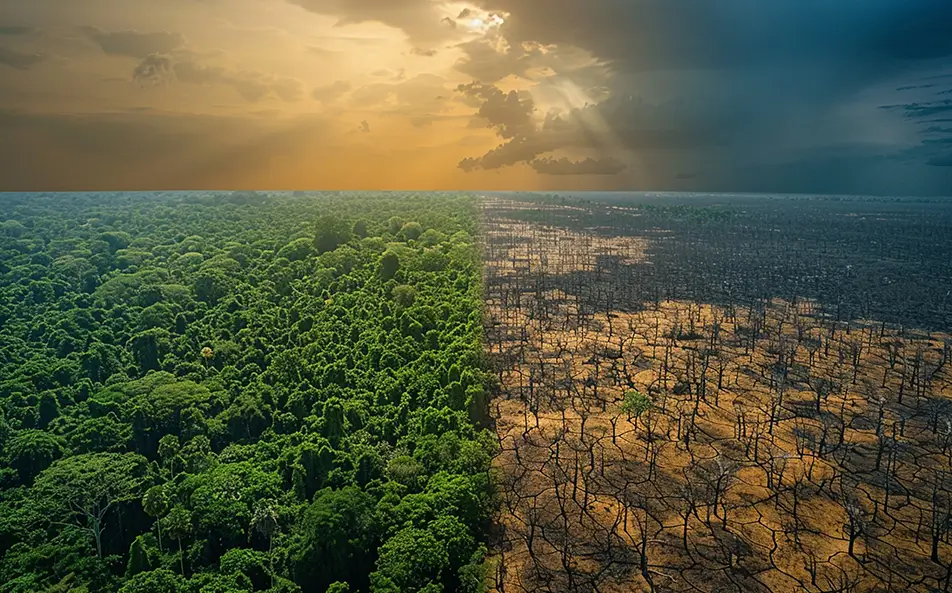
These steps show that climate action can deliver results when policy, investment and execution align.
These are not failures of intent, but of speed and preparedness.
India’s climate journey in 2025 sends a clear message: progress is real, but risks are accelerating faster than solutions. Clean energy growth shows what is possible. Extreme heat and pollution show what happens when adaptation lags.
This second and final reference to Climate Change in India matters because the challenge is now about protecting lives while transforming systems.
Climate action is no longer about distant targets. It is about making cities and communities livable today.
Climate change is no longer abstract data. It is shaping how Indians work, breathe and survive extreme weather. Explaining both progress and setbacks helps citizens understand what is working and what needs urgent attention.
Everything you need to know
Because clean energy progress reduces future emissions, not today’s heat or pollution. The power plants built now help long-term goals, but extreme weather is already locked in due to past emissions and rising global temperatures.
They are getting worse. Heatwaves are lasting longer, covering larger areas, and coming earlier in the year. Even when peak temperatures are similar, the number of hot days has increased, making summers harder to endure.
Hotter temperatures trap pollutants closer to the ground and speed up chemical reactions in the air. This is why air quality stays poor for longer periods, especially in cities, even outside the winter season.
Renewables add capacity, but coal still provides steady power during peak demand and at night when solar isn’t available. Phasing out coal takes time because the grid needs reliable backup and alternative storage solutions.
It means higher electricity bills during heatwaves, more health risks from pollution, water shortages in cities, and disruptions to work and daily routines. Climate change is no longer distant-it directly affects everyday life.


Sep 16, 2026
TUI Staff
Sep 15, 2026
TUI Staff
Sep 04, 2026
TUI Staff
Sep 04, 2026
TUI Staff
Sep 19, 2026
TUI Staff
Sep 19, 2026
TUI Staff
Sep 17, 2026
TUI Staff
Sep 17, 2026
TUI Staff

Stay informed with independent, fact-checked journalism on technology, environment, government, economy and more. India’s most trusted digital news platform.


Comments (0)
Be the first to comment!