
US
Sun, Mar 15, 2026 | 10:46 AM IST

The United Indian


The film O’Romeo has arrived with curiosity already attached to it, but not because of its trailer or casting announcements. What has pulled attention instead is the uncomfortable truth sitting underneath the project - a story rooted in Mumbai’s underworld, shaped by obsession, secrecy, and a relationship that ended without reconciliation. The figure at the centre of this story, often identified as Hussain Ustara, was real. So was the woman who chose to walk away from him.
This is not a love story. It never was. The O’Romeo real life story is closer to a cautionary tale, one that unfolded during a time when crime in Mumbai thrived on silence and fear, and when alliances often blurred into control.
Much of what the film draws from comes from the lives of Hussain Ustara and Sapna Didi. Their association was not casual. According to records and long-standing reports, they were tied together by a plan that bordered on the impossible - the alleged attempt to assassinate Dawood Ibrahim.
What is important here is not whether the plan could ever have succeeded, but what it required. Trust. Total commitment. Silence. And a willingness to cross lines that most people never approach. When people search who is Hussain Ustara, they usually find very little. Police files mention him sporadically. Journalistic records offer fragments. He appears less as a personality and more as a function - a contract killer operating in the shadows, rarely speaking, rarely seen.
Sapna Didi’s presence complicates that picture.
The question who is Sapna Didi has never had a simple answer. She was not merely associated with the plot; accounts suggest she was deeply involved in it. Not an accessory, not a bystander. Someone who understood the stakes and chose to engage anyway. But this is where the story breaks from expectation.
According to material referenced during the film’s research, the relationship ended abruptly after Hussain allegedly behaved inappropriately toward her. That moment is treated not as scandal, but as rupture. Whatever loyalty existed until then dissolved instantly.
In later Sapna Didi news discussions, one detail repeats: she did not return. She did not negotiate. She did not maintain contact. She left.
That decision is what gives the story its weight. Crime narratives often collapse into spectacle. This one doesn’t. The separation was not strategic. It was personal. The film reportedly frames this moment as the emotional core not the plot against Dawood, not the violence, but the instant when power lost its hold. When control stopped working.
Everything that followed came from that break.
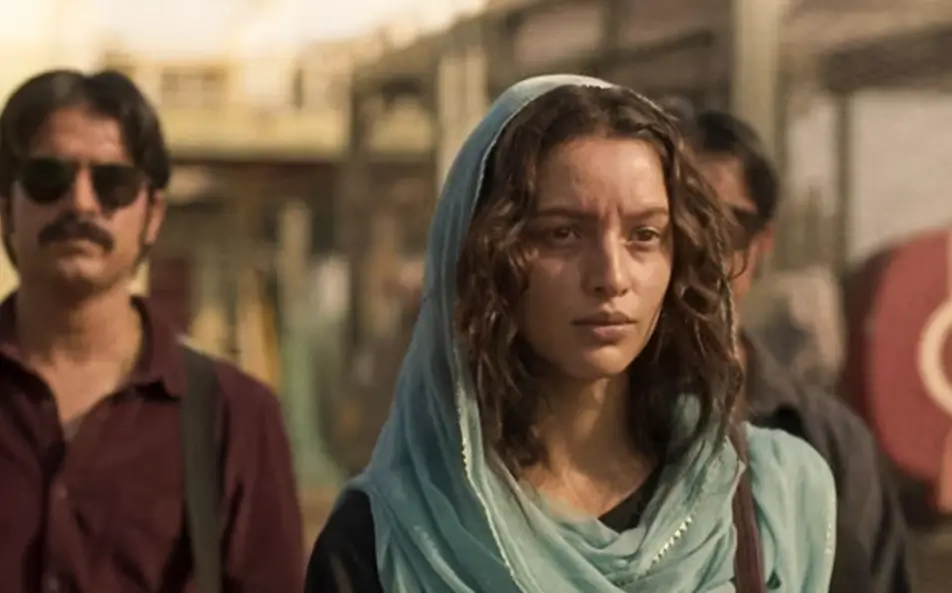
Turning such a story into cinema is risky. Director Vishal Bhardwaj has built a reputation for working in morally grey spaces, and that experience matters here. Early accounts suggest he has resisted the urge to dramatise the criminal world as spectacle. Instead, the emphasis appears to be on instability. On obsession. On how control fractures when it is challenged.
The character inspired by Hussain is played by Shahid Kapoor, whose portrayal is said to avoid overt menace. This is the first of two mentions of Shahid Kapoor here, because his role is less about intimidation and more about internal collapse.
Opposite him is Tripti Dimri as Sapna Didi. Her performance is described as restrained, almost withdrawn. That restraint matters. It prevents the character from becoming symbolic or romanticised. This is the first mention of Tripti Dimri, and it reflects the care taken with her character’s arc - involvement, doubt, and then refusal.
The reason the O’Romeo real life story continues to surface is because it resists simplification. There is no redemption arc. No neat justice. Only consequences. Online conversations under O’Romeo news often point to how rare it is for mainstream cinema to engage with such material without turning it into myth. This story insists on discomfort.
Much of what survives about Hussain Ustara comes from partial reporting. Hussain Ustara news archives are thin, fragmented. He exists more as absence than presence. Sapna’s disappearance from public life only deepens that absence. Her decision to step away has been read not as escape, but as agency. A refusal to remain defined by a world that thrived on silence.
The second appearance of Shahid Kapoor here reflects the scrutiny around how such a figure is portrayed. Early responses suggest restraint rather than glamour. The second and final mention of Tripti Dimri mirrors her character’s transformation from accomplice to dissenter which gives the film its moral centre.
Crime based films often struggle with responsibility. Early indications suggest this one leans toward consequence. Vishal Bhardwaj’s involvement has reassured many that the story will not chase spectacle. What remains is a question the film cannot answer who owns a story once those involved disappear from view?
The United Indian looks at cinema and history where fact meets interpretation, asking how stories survive and who gets to walk away from them.
Everything you need to know
Yes, the film is inspired by real events and real people from Mumbai’s underworld. While the narrative is fictionalised for cinema, the central relationship and the criminal background it draws from are rooted in documented incidents.
Hussain Ustara is believed to have been a contract killer operating on the margins of organised crime in Mumbai. His name appears in police records and crime reporting, though much of his life remains undocumented and surrounded by secrecy.
Sapna Didi was not just associated with the plot but was reportedly an active participant in it. What makes her role significant is her decision to completely sever ties after a personal boundary was crossed, changing the course of the story.
According to accounts referenced in the film’s research, she walked away after Hussain allegedly behaved inappropriately toward her. The separation was final and based on personal ethics rather than strategy.
Early indications suggest the film avoids glamorising the underworld. Instead, it focuses on psychological tension, moral consequences, and how power and control eventually collapse from within.
#weareunited
We respect your privacy. Unsubscribe at any time. Privacy Policy
Feb 04, 2026
TUI Staff
Feb 04, 2026
TUI Staff
Feb 03, 2026
TUI Staff
Jan 29, 2026
TUI Staff
Mar 13, 2026
TUI Staff
Mar 11, 2026
TUI Staff
Mar 11, 2026
TUI Staff
Mar 10, 2026
TUI Staff
Stay Tuned with The United Indian!
Our news blog is dedicated to sharing valuable and pertinent content for Indian citizens. Our blog news covering a wide range of categories including technology, environment, government & economy ensures that you stay informed about the topics that matter most. Follow The United Indian to never miss out on the latest trending news in India.

Comments (0)
Be the first to comment!