
Manoj Bajpayee at the Centre of Ghooskhor Pandat Title Row: Why Netflix Is Facing Online Anger
Title Sparks Fury
 IN
Tue, Oct 13, 2026 | 03:07 PM IST
IN
Tue, Oct 13, 2026 | 03:07 PM IST

The internet has a way of deciding what matters within minutes. Sometimes it is a line of dialogue. Sometimes a scene. And sometimes, as this week proved, it is just a title. A few hours after Netflix released the teaser for Ghooskhor Pandat, social media timelines filled up with anger, sarcasm, and warnings. The reactions were not really about the teaser’s visuals or even its storyline. Instead, the conversation narrowed quickly, almost obsessively, to one thing: the title.
The film stars Manoj Bajpayee as a corrupt police officer, someone operating deep inside a morally compromised system while being pulled into what looks like an international conspiracy. The teaser suggests a dark, uncomfortable world. But before viewers could engage with any of that, the title itself became the lightning rod.
Many felt the phrasing crossed a line. Some said it felt careless; others said it felt intentional. A few called it lazy provocation. Calls for a Netflix boycott followed, not quietly but loudly, with users urging the platform to take responsibility for what they saw as a needless controversy.
Online outrage is hardly new, especially around films. What made this episode stand out was how fast it escalated and how little room there was for pause. Within minutes, the title was being pulled apart, interpreted, reinterpreted, and judged, often without any reference to the story being told.
For critics, the issue wasn’t whether corruption should be shown on screen. Indian cinema has done that for decades. The discomfort lay in the language and in the fear that certain words were being used casually, stripped of nuance, to grab attention. Some viewers said they felt the title reduced something complex into something crude.
Others pushed back, arguing that fictional characters are not moral endorsements and that uncomfortable titles are sometimes chosen precisely to reflect uncomfortable truths. But in the current climate, explanations tend to arrive too late. Once a narrative takes hold online, it rarely loosens its grip.
Netflix, by now, is familiar with this territory. As a global platform operating in a culturally sensitive market, it often finds itself balancing creative freedom against public sentiment. In this case, the platform’s initial silence only intensified the criticism. For many users, the lack of response felt dismissive, even if no such intent was expressed.
There’s also a deeper question at play. Should platforms anticipate every possible interpretation of a title, or is there still space for audiences to encounter a story before judging it? That question has no easy answer, and each controversy seems to push it further into the spotlight.
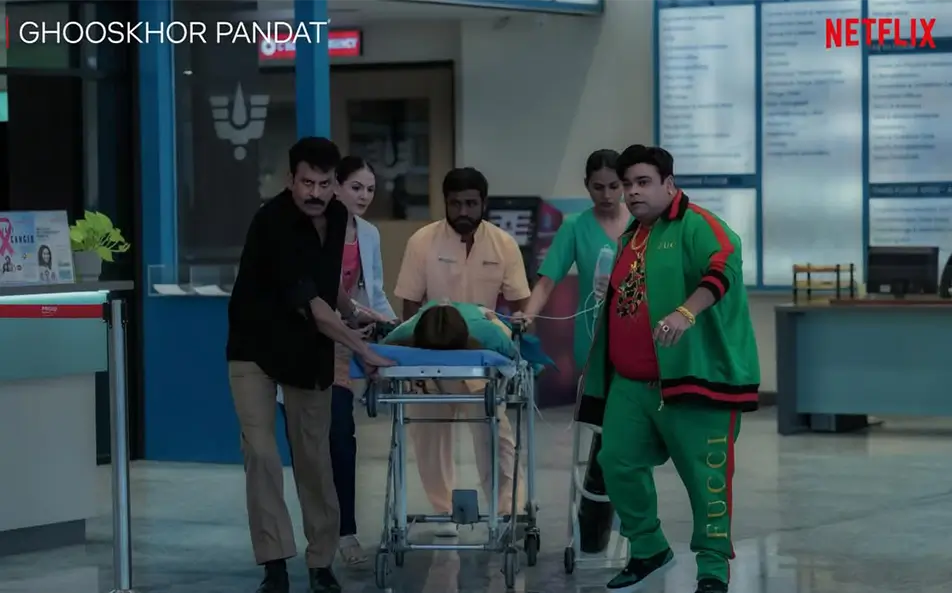
Part of the conversation also circles back to the actor himself. Bajpayee’s career has been built on the discomfort of characters that don’t offer easy sympathy or neat resolution. His work has rarely aimed to please everyone, and that has earned him credibility over time.
That credibility is exactly why reactions are split. Some fans believe his presence signals intent and depth, not cheap shock. Others feel that respected artists should be more alert to how their projects are framed, especially when language becomes the headline rather than the story.
This isn’t the first time discussions around Manoj Bajpayee movies and Manoj Bajpayee movies and TV shows have spilled beyond performance into social debate. His work often invites reflection—and reflection, in today’s climate, often arrives wearing the mask of outrage.
At The United Indian, we see this moment less as a verdict and more as a symptom. Titles are now judged faster than stories, and intent is often assumed before it is explored. That doesn’t mean concerns should be brushed aside, but it does suggest that patience is becoming a rare commodity in cultural conversations.
Whether Ghooskhor Pandat ultimately earns or loses goodwill will depend on the film itself, not the storm around its name. For now, the controversy says as much about the audience’s state of mind as it does about cinema.
Everything you need to know
Because Manoj Bajpayee is the face people recognise. When something upsets the public, they don’t look for producers or writers first. They look for the actor they know.
No, Manoj Bajpayee hasn’t said anything publicly about the title so far. The anger is coming from assumptions, not from his statements or interviews.
Many online users seem to think so, even though that’s rarely how films work. Titles are usually decided much earlier, often before actors even come on board.
Not really. Manoj Bajpayee has done films that made people uncomfortable before. The difference this time is how fast social media reacted.
Some are angry enough to say so online. Whether they follow through is another matter. Online anger often cools down faster than expected.


Oct 12, 2026
TUI Staff
Oct 08, 2026
TUI Staff
Oct 07, 2026
TUI Staff
Oct 07, 2026
TUI Staff
Oct 09, 2026
TUI Staff
Oct 09, 2026
TUI Staff
Oct 09, 2026
TUI Staff
Oct 09, 2026
TUI Staff

Stay informed with independent, fact-checked journalism on technology, environment, government, economy and more. India’s most trusted digital news platform.


Comments (0)
Be the first to comment!