
US
Mon, Feb 02, 2026 | 10:46 PM IST

The United Indian

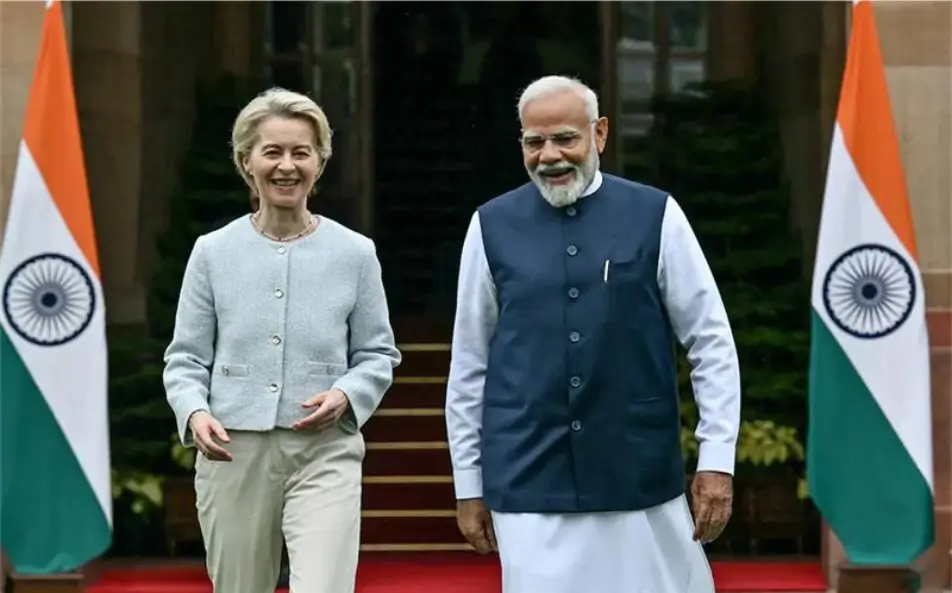
When India and the European Union first set out to negotiate a trade deal almost twenty years ago, the mood was hopeful and uncomplicated. Global trade was taken for granted, supply chains were trusted to hold, and politics was rarely seen as part of economic bargaining. The discussions dragged on, interest slowly ebbed away, and the effort was eventually shelved without much fanfare.
Its return now feels far more deliberate.
The world that surrounds these renewed discussions is one shaped by disruption. Crises have become frequent, alliances less predictable, and economic decisions harder to separate from strategic ones. In that environment, trade agreements are no longer treated as paperwork exercises, they’re increasingly seen as tools to manage risk and shape long-term partnerships.
Across Europe, recent shocks have forced uncomfortable reassessments. Dependence on a limited number of suppliers has exposed vulnerabilities, prompting a quiet but steady push to broaden economic relationships. Stability now matters as much as cost, and reliability counts alongside efficiency.
India enters this picture as a country with scale, momentum, and room to grow. For European policymakers, it represents an opportunity to build a deeper economic relationship without adding to existing dependencies.
That’s why the India-EU free trade discussions are being framed differently this time. They are less about quick gains and more about setting the terms of engagement for a world where uncertainty is no longer the exception it’s the norm.
One of the most notable developments in the negotiations is the growing emphasis on defence collaboration. The Financial Times has reported on European defence firms exploring deeper industrial cooperation with India, particularly under the country’s domestic manufacturing initiatives.
These discussions reportedly include joint production and technology collaboration areas that traditionally sat outside the scope of trade agreements. Their inclusion suggests a higher level of institutional trust between both sides.
For India, such cooperation supports domestic capability building. For Europe, it offers a reliable partner with long-term scale.
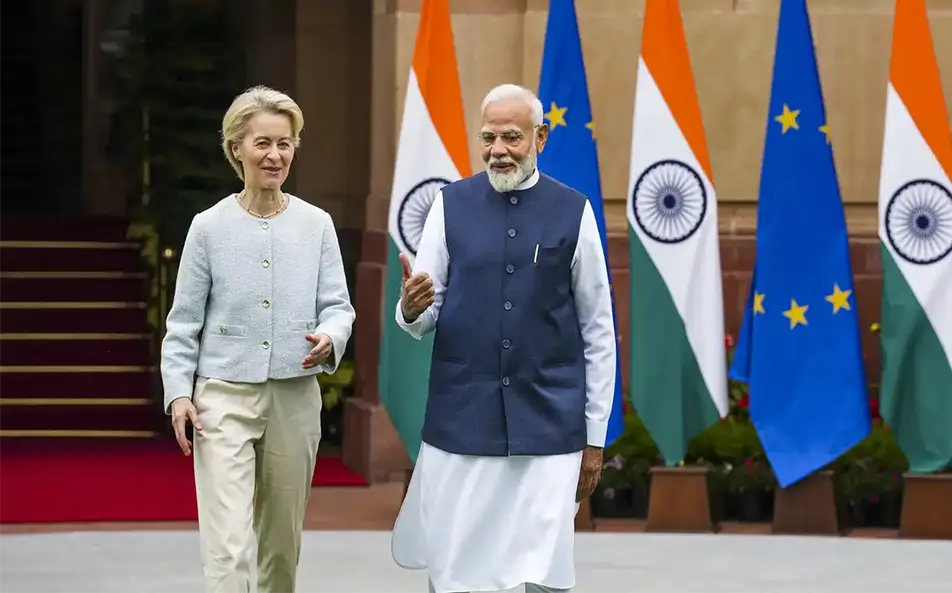
Trade discussions are beginning to reflect everyday pressures on the ground, not just numbers on a page.
Across Europe, shortages of skilled workers are being felt in hospitals, construction sites, and tech offices alike. That strain is nudging governments to look beyond traditional trade tools. India is increasingly seen as a place where that talent exists, particularly in healthcare, engineering, and digital roles. The idea on the table isn’t open migration, but practical, skills-based routes that address specific needs.
If this approach moves forward, it will mark a change in how India engages with advanced economies where workforce mobility becomes a useful part of economic ties, not a separate or sensitive issue.
The EU already ranks among India’s most significant trading partners. CNBC has cited official figures showing bilateral trade in goods crossing €120 billion annually, with services contributing additional value.
European companies are increasingly eyeing India as a market for future-facing industries — from clean energy and advanced manufacturing to aviation and pharmaceuticals. On the other side, Indian exporters are pushing for easier entry into Europe for everyday strengths such as textiles, chemicals, engineering products, and IT-led services.
What stands out in the current talks is the emphasis on rules as much as rates. Instead of focusing only on lowering tariffs, both sides are spending significant time on aligning standards and regulations, reflecting a deal shaped by long-term access rather than short-term concessions.
That emphasis could translate into faster on-ground impact.
Trade agreements increasingly reflect geopolitical alignment. The Economist has analysed how Europe’s engagement with India fits into a broader Indo-Pacific outlook aimed at economic balance and resilience.
For India, deeper ties with Europe strengthen global leverage while complementing partnerships with other major economies. This strategic dimension explains why the second and final reference to India EU FTA carries weight- it signals positioning, not repetition.
Even with momentum building, the hard parts haven’t disappeared. Areas like agriculture, data rules, and intellectual property remain tricky, with neither side eager to rush decisions that carry long-term consequences.
What’s different this time is the approach. Rather than forcing everything into a single breakthrough, negotiators are working through easier sections first and leaving room to bridge gaps on the most sensitive issues later. That step-by-step strategy could be what sets these talks apart from earlier efforts that struggled to move forward.
If concluded, analysts quoted by Bloomberg suggest the agreement could become one of India’s most comprehensive trade frameworks. For the EU, it would underline a decisive economic pivot toward South Asia.
The mention of EU FTA here reflects how European policymakers increasingly view the deal as a foundational element of future trade strategy rather than a standalone agreement.
This negotiation is not simply about trade volumes or tariff schedules. It reflects how economies adapt to uncertainty, how partnerships evolve, and how strategy now shapes commerce.
Trade has become a language of alignment.
At The United Indian, we examine how policy choices influence India’s global standing. This agreement is not just about economics it reflects confidence, capability, and India’s expanding role in shaping international frameworks.
Everything you need to know
Because it goes beyond the usual give-and-take of tariffs. The talks touch areas like strategic trust, technology sharing, and workforce planning-subjects that usually sit outside trade negotiations.
Potentially, yes. Deeper engagement with the EU signals that India is being taken seriously as a long-term economic and strategic partner, not just a large market.
Both sides appear more flexible than before. Instead of trying to solve everything at once, negotiators are addressing easier issues first and building momentum gradually.
Not immediately, but over time the effects could show up through job creation, new business opportunities, and clearer pathways for skilled professionals working across regions.
Because it reflects a broader shift in how global trade is evolving away from pure economics and toward partnerships shaped by trust, resilience, and long-term alignment.
#weareunited
We respect your privacy. Unsubscribe at any time. Privacy Policy
Feb 02, 2026
TUI Staff
Dec 19, 2025
TUI Staff
Dec 18, 2025
TUI Staff
Dec 15, 2025
TUI Staff
Stay Tuned with The United Indian!
Our news blog is dedicated to sharing valuable and pertinent content for Indian citizens. Our blog news covering a wide range of categories including technology, environment, government & economy ensures that you stay informed about the topics that matter most. Follow The United Indian to never miss out on the latest trending news in India.


Comments (0)
Be the first to comment!