
What Gets Cheaper and Costlier After Union Budget 2026? Full List Explained
Prices After Budget
 IN
Tue, Oct 13, 2026 | 03:37 PM IST
IN
Tue, Oct 13, 2026 | 03:37 PM IST

The Union Budget presented in Parliament this year has once again put household spending, imports, and market sentiment in focus. As Nirmala Sitharaman outlined changes in duties and taxes, consumers and businesses began closely tracking what might turn cheaper or costlier in the months ahead.
While budget speeches often focus on macroeconomic signals, the real impact of such announcements is felt far from Parliament - at shop counters, in factory input bills, and across supply chains. The Union Budget 2026 has introduced targeted reductions and selective increases, aiming to balance affordability with domestic manufacturing goals rather than deliver dramatic overnight shifts.
Below is a closer look at how prices are expected to move.
Budget announcements rarely change prices the very next day. Duty changes don’t flip a switch the next morning. Goods already sitting in warehouses, contracts signed months earlier, and distribution costs all come between an announcement and what consumers finally pay.
Still, customs duty changes matter because they shape the base cost of imported goods. Over weeks and months, that base cost influences factory pricing, wholesale rates, and retail margins. This time, the government returned to that lever, but without sweeping or aggressive moves.
Some of the duty changes are clearly aimed at inputs rather than finished products. That distinction is important. When raw materials or components become cheaper to import, the benefit often shows up indirectly by preventing further price increases rather than delivering visible discounts.
Items and categories that may see relative relief include:
For households, the impact may feel subtle: fewer sudden hikes, steadier prices, or delayed increases rather than outright drops.
At the same time, not everything moves in one direction. Some categories face higher levies, usually where the government wants to encourage domestic alternatives. The logic is straightforward: make imports less attractive when local production exists or is being promoted.
Items that could see price pressure include:
In these cases, businesses may pass on at least part of the increase. Whether consumers absorb higher prices or switch to alternatives will become clearer over time.
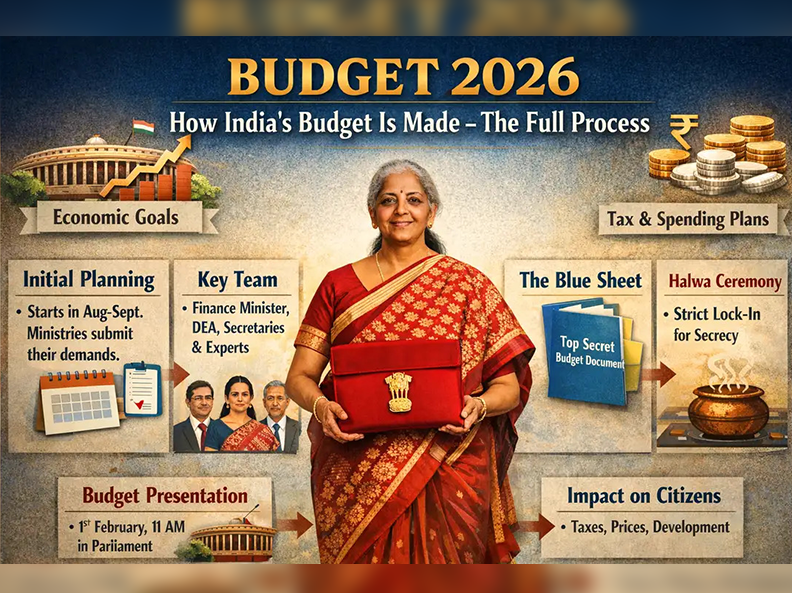
Budget speeches often talk about trade in abstract terms, but their effects are very real. Higher or lower duties decide which products flood the market and which struggle to compete.
For businesses dealing in import items in India, this budget means recalculating costs. Some companies will absorb changes to stay competitive. Others won’t. Smaller traders, with limited pricing power, often feel the squeeze first.
The government’s broader approach remains consistent: encourage local manufacturing without completely shutting the door on critical imports.
While consumers focus on prices, investors look for intent. The stock market tends to react less to individual item prices and more to what duty changes suggest about policy direction.
Lower duties on inputs are often read as support for certain sectors. Higher duties can signal tighter margins ahead. Market reactions are rarely uniform, and many stocks move only after companies clarify how they plan to handle cost changes.
Budget decisions don’t exist in isolation. They reflect political priorities as much as economic logic. In presenting the budget, the finance minister stressed balance - protecting domestic industry while remaining open to global trade.
That balance is never perfect. Every duty hike angers someone. Every cut raises questions about revenue loss. This budget avoided extremes, choosing incremental adjustments instead.
Rather than expecting instant changes, consumers should watch trends. Are certain products stabilising after months of increases? Are alternatives becoming more visible on shelves? Are discounts returning slowly?
Those signals often reveal the real impact of budget decisions better than headline lists ever do. The second and final mention of Union Budget 2026 fits here as a reminder that budgets shape direction, not daily shopping bills overnight.
India’s use of trade duties has become more strategic over time. Adjustments now arrive almost every year, fine-tuning rather than overhauling. This creates uncertainty, but also predictability of intent.
For consumers, that means prices will keep shifting sometimes subtly, sometimes sharply but rarely without reason.
At The United Indian, we believe budgets are best understood not through tables, but through lived experience. What costs more, what stays steady, and what quietly becomes affordable again.
Duty tweaks may not grab headlines, but they decide everyday economics. And in that sense, this budget will speak less through announcements and more through outcomes that unfold slowly, store by store.
Everything you need to know
Maybe, but not immediately. Budget changes don’t work like a sale. If prices fall, it usually happens slowly as new stock comes in and companies adjust costs.
Because the government uses duties to push behaviour. If it wants to support local manufacturing, imports become expensive. If it wants to ease supply, duties are reduced.
Not always. Sometimes businesses absorb the change, sometimes they pass it on. Competition, demand, and even timing matter as much as the tax itself..
Not necessarily. Most duty tweaks affect inputs or specific goods, not everyday groceries directly. The impact is often indirect rather than obvious.
Markets react to signals and expectations. Actual prices depend on supply chains, contracts and inventory, all of which take time to adjust.


Oct 13, 2026
TUI Staff
Oct 13, 2026
TUI Staff
Oct 09, 2026
TUI Staff
Oct 09, 2026
TUI Staff
Oct 13, 2026
TUI Staff
Oct 09, 2026
TUI Staff
Oct 09, 2026
TUI Staff

Stay informed with independent, fact-checked journalism on technology, environment, government, economy and more. India’s most trusted digital news platform.


Comments (0)
Be the first to comment!