
India US Trade Deal: What Trump Says He Agreed with Modi and Why the Picture Is Still Unclear
Talks After Tariffs
 IN
Tue, Oct 13, 2026 | 02:58 PM IST
IN
Tue, Oct 13, 2026 | 02:58 PM IST

When US President Donald Trump said that Washington and New Delhi had reached an understanding on trade, it caught attention mainly because of when he said it. The claim came only months after the US slapped a steep 50 per cent tariff on Indian goods - a decision that shook exporters and strained ties between the two countries.
Trump suggested the gap had been narrowed through direct talks with Prime Minister Narendra Modi. But without a joint statement or signed agreement, it’s still unclear how solid or final this understanding really is.
Trade talks between India and the United States have always moved at a slow pace, pulled in different directions by domestic politics on both sides. This moment seems no different - with strong political messaging coming well before any formal confirmation.
The tariffs imposed last year hit Indian exporters hard, especially in sectors dependent on the US market. Businesses were left uncertain about costs, contracts, and future access. Against that backdrop, Trump’s claim of progress has drawn attention. Not because everything is settled, but because it signals a possible easing of pressure after months of strain.
This is the second major moment in recent months where the india us trade deal has been publicly discussed at the leadership level.
According to Trump’s remarks, these are the broad areas where he says agreement was reached.
First, Trump claimed India had agreed to offer greater access to American companies. He told US firms would find it easier to operate in India, particularly in sectors where regulations have long been criticised by Washington.
Second, he mentioned tariff adjustments. Trump suggested that India had shown willingness to review certain import duties that the US considers excessive. He did not specify timelines or products.
Third, supply chains featured prominently. Trump said both countries want to reduce dependence on rival economies and work more closely on manufacturing and sourcing.
Fourth, energy was highlighted as a major area of cooperation. Trump indicated that India was open to increasing purchases of American energy, positioning it as both an economic and strategic move.
Fifth, defence manufacturing was mentioned as another area of alignment. Trump spoke about expanding joint production rather than limiting ties to defence sales alone.
Sixth, he referred to stronger protections for intellectual property, an issue US companies have raised repeatedly in trade discussions with India.
Finally, Trump described the overall understanding as a “reset”, saying it was meant to benefit workers and businesses in both countries rather than favour one side.
Equally important is what Trump did not clarify. There were no details about rollback of the 50% tariffs imposed last year. There was no mention of timelines, legal text, or enforcement mechanisms. There was also no joint statement from the Indian government confirming the claims in the same language. Trade experts note that such announcements often reflect intent rather than final agreements.
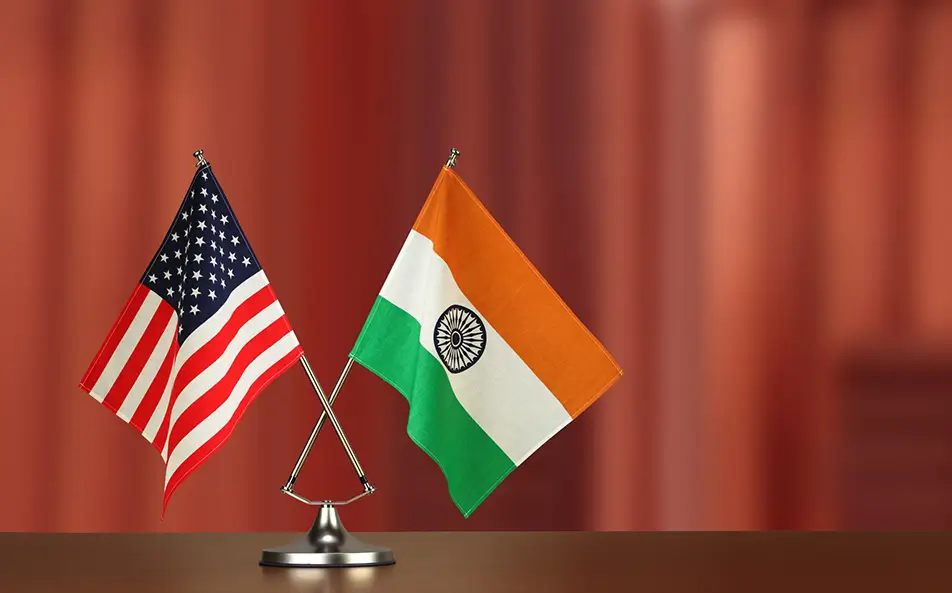
From India’s point of view, maintaining stable trade ties with the US is important, but not at any cost. India has consistently defended its policy choices, especially in sensitive areas like agriculture, digital regulation, and energy sourcing.
That balance becomes clear when issues such as India russia oil are discussed. India has repeatedly said its energy decisions are driven by economic needs, not external pressure. Any trade adjustment with the US is therefore likely to be gradual, not sweeping.
Industry response so far has been cautious. Exporters welcome the possibility of reduced tariffs, but most are waiting for official confirmation before changing plans.
Companies affected by last year’s tariff hike say predictability matters more than announcements. Without clarity, uncertainty remains.
Global investors are also watching closely to see whether the broader us India trade deal conversation moves beyond statements and into policy action.
The next phase will likely involve negotiators and officials rather than political leaders. Technical teams will need to translate broad promises into workable trade rules. Whether tariffs are reduced, phased out, or restructured will depend on those talks.
For now, Trump’s announcement has reopened the conversation, but it has not closed it.
The second and final mention of the India us trade deal fits here, as a reminder that real trade agreements are judged by implementation, not speeches.
At The United Indian, we view trade declarations as openings rather than outcomes. Diplomatic language often moves faster than economic policy, and real change takes time to surface.
This moment suggests a willingness on both sides to reset the tone after months of strain. Whether that willingness leads to lasting results will depend on careful negotiation and follow-through, not headlines alone. The coming moments will reveal whether this engagement produces tangible benefits or remains a work in progress.
Everything you need to know
As of now, it appears to be more of an announced understanding than a signed agreement. Final details usually come later through official documents and negotiations.
There has been no clear confirmation about that yet. Any rollback or reduction of tariffs is likely to happen gradually, not overnight.
India have not released a detailed statement matching Trump’s points word for word. Such differences are common in early stages of trade discussions.
Exporters see this as a positive signal, but most are waiting for clarity. Actual impact will depend on whether tariffs are reduced and how soon that happens.
Energy trade is a major economic and strategic issue. It affects costs, supply security, and diplomatic balance, which is why it features prominently in discussions.


Oct 09, 2026
TUI Staff
Oct 09, 2026
TUI Staff
Oct 09, 2026
TUI Staff
Oct 09, 2026
TUI Staff
Oct 09, 2026
TUI Staff
Oct 09, 2026
TUI Staff
Oct 09, 2026
TUI Staff
Oct 09, 2026
TUI Staff

Stay informed with independent, fact-checked journalism on technology, environment, government, economy and more. India’s most trusted digital news platform.


Comments (0)
Be the first to comment!