
US
Sat, Feb 07, 2026 | 01:55 PM IST

The United Indian

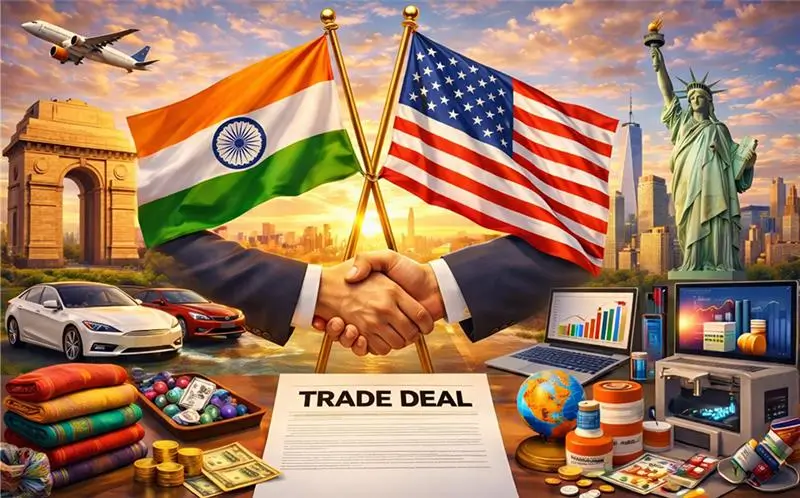
The latest movement around the India us trade deal has started a fresh round of discussion across business circles and policy spaces. For months, the focus had been on rising trade pressure, tariffs, and uncertainty. Now, the mood appears to be shifting, slowly but noticeably, towards stability and dialogue again.
For Indian exporters, the past year had been tense. At one stage, the tariff impact on certain goods had climbed close to 50 per cent. A part of that pressure was linked to India’s purchase of Russian oil, which led to an added layer of trade strain. That period created confusion and caution among companies dependent on overseas markets.
Now, the new interim arrangement between the two countries has changed the direction slightly. Tariffs are expected to come down to around 18 per cent, offering a degree of relief to exporters who had been struggling to stay competitive. The development has been described as a positive step forward by Union Commerce Minister Piyush Goyal, who called the framework a meaningful milestone in the growing partnership between the two nations.
The trade deal India us understanding is not limited to duties alone. What has caught attention is the broader conversation around long-term investment, with figures touching nearly $500 billion, along with stronger cooperation in technology sectors. While such numbers may take time to translate into real projects, they send a strong signal about intent.
Businesses often look for clarity more than anything else. When tariff levels are uncertain, planning becomes difficult. But when policies begin to stabilise, companies start thinking about expansion, hiring, and new markets again. Even the idea of reduced pressure can make a difference in confidence.
The second and final mention of India us trade deal fits here because this moment seems less about a sudden breakthrough and more about a steady attempt to rebuild economic balance.
For industries that rely heavily on exports, tariff cuts mean more than just numbers. They affect pricing, demand, and long-term contracts. Over the past year, many businesses had been forced to rethink strategies. Some explored alternative markets, while others absorbed losses and waited for clarity.
With duties moving downwards, there is hope that trade flow may gradually stabilise. It may not lead to instant change, but it gives exporters breathing space. Over time, if conditions remain steady, the benefits could begin to show in production and hiring decisions.
The US India trade deal conversation has always been shaped by both economic needs and political realities. Trade relations between major economies are rarely smooth. They move through phases - pressure, negotiation, adjustment, and then balance.
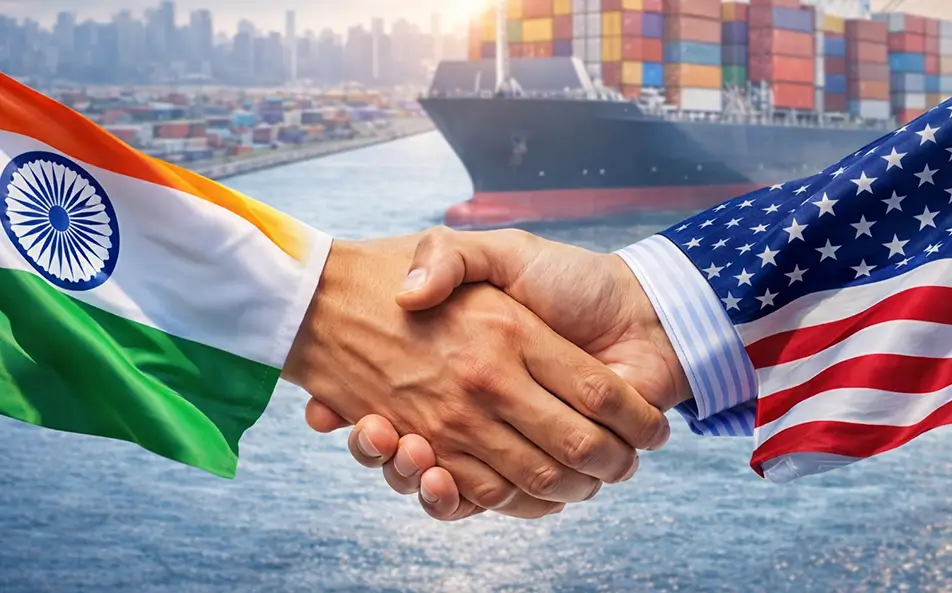
One of the most discussed aspects of the agreement is the promise of long-term investment and deeper technology collaboration. If even part of that capital begins to flow over the coming years, it could support sectors like manufacturing, clean energy, and infrastructure.
Technology partnerships, in particular, can shape the future of economic ties. They often bring innovation, skill development, and opportunities for new industries. But these things happen slowly. Announcements come first. Projects follow later.
For now, the focus remains on direction. And the direction seems to be towards cooperation rather than confrontation.
Trade agreements are not just about exports and imports. They also reflect how countries see each other as partners. When tariffs rise, it sends one message. When they fall, it sends another.
This development suggests both sides are willing to step back from the pressure and look for common ground. It doesn’t mean all disagreements have disappeared. But it shows a willingness to keep the economic relationship active.
Markets often respond more to signals than to immediate outcomes. Even a gradual shift in policy direction can influence investor sentiment and business confidence.
At The United Indian, we see this as a step that may not change things overnight but could shape the future in subtle ways. Trade relations between large economies evolve slowly. What matters most is the willingness to keep the conversation moving.
If tariff relief continues and investment promises begin to turn into real partnerships, the impact may quietly spread across sectors over time. For now, the development feels like a pause after months of tension and a chance to move forward with more balance.
Everything you need to know
Many see the India us trade deal as a sign that both countries are trying to ease trade pressure and return to a more stable economic relationship after months of tension.
A lower tariff under the India-US trade deal can help exporters stay competitive in international markets and plan their business decisions with more confidence.
No, the India-US trade deal also talks about investment and technology cooperation, which could shape long-term economic ties between the two nations..
If the investment promises linked to the India-US trade deal turn into real projects over time, they could support industries and create employment opportunities.
The effects of the India-US trade deal may take time. Trade policies usually influence businesses slowly, and the real results often appear over months or years.
#weareunited
We respect your privacy. Unsubscribe at any time. Privacy Policy
Feb 02, 2026
TUI Staff
Jan 27, 2026
TUI Staff
Dec 19, 2025
TUI Staff
Dec 18, 2025
TUI Staff
Stay Tuned with The United Indian!
Our news blog is dedicated to sharing valuable and pertinent content for Indian citizens. Our blog news covering a wide range of categories including technology, environment, government & economy ensures that you stay informed about the topics that matter most. Follow The United Indian to never miss out on the latest trending news in India.


Comments (0)
Be the first to comment!