
US
Fri, Jan 16, 2026 | 05:18 AM IST

The United Indian

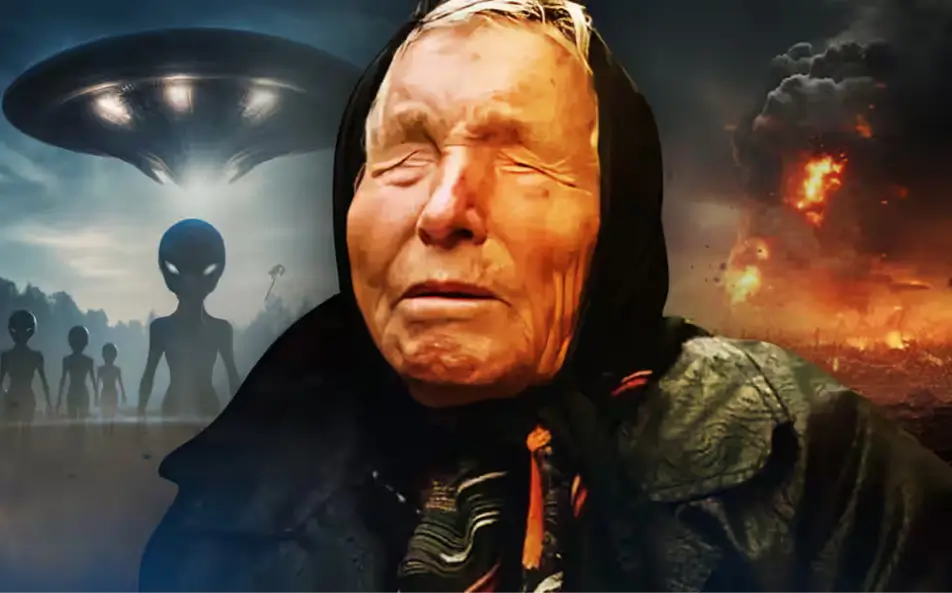
People are talking about the future a lot these days. It’s not hard to see why. Wars haven’t stopped, prices keep rising, and there’s a feeling that things are not very stable. When times feel like this, old stories come back. Predictions. Warnings. Names people remember from the past. One of those names is Baba Vanga, a blind woman from Bulgaria whose words are still shared even years after she died. Interest in baba vanga predictions has returned mostly because people already feel uneasy about what’s coming next.
This kind of thing isn’t new. Whenever the present feels confusing, people look backwards. They try to find signs or meanings in old stories. Prophecies do that for many people. They can feel reassuring, like someone knew this would happen. At the same time, they can be frightening, because they make the future seem unavoidable. Baba Vanga’s story sits right between those two feelings.
Baba Vanga was born in 1911, in a quiet village where her life began like anyone else’s. As a child, she lost her eyesight during a strong storm, something she later said changed everything for her. People who spent time around her noticed that she often spoke in unusual ways, sometimes about things that felt oddly specific or hard to explain. Slowly, these stories travelled beyond her village, and curiosity about her began to grow.
Over the years, visitors started coming to her in growing numbers. Some wanted advice about their personal lives. Others were curious about larger events and what the future might hold. There was never a single moment when she became famous it happened gradually, through stories shared from one person to another.
There is also something important to keep in mind. Baba Vanga never sat down and wrote her predictions. Nothing came directly from her pen. What survives today comes from people who spoke to her, remembered conversations, or recorded them later. Many of these accounts were written years after she died. That makes it difficult to separate her original words from later interpretations, but it is also the reason her story continues to change and resurface even now.
Out of all the claims linked to her name, the one tied to 2026 seems to unsettle people the most. In many retellings, that year is described as the point where a major global conflict begins. Online, it often gets bundled with wider world-war 3 predictions, especially whenever news about international tensions starts to dominate headlines.
Some people see current events as proof that the warning is coming true. Others push back, saying every generation feels like it is living close to disaster, knowing what came before and fearing what might come next. Still, fixing a specific year to the idea gives it extra weight. It turns a vague fear into a countdown, and that sense of urgency is what keeps the prediction circulating long after it was first mentioned.
Alongside war, Baba Vanga was also said to have predicted humanity’s first confirmed contact with extraterrestrial life. Not an invasion, but a moment of discovery that would change how humans see their place in the universe.
In recent years, this idea has gained renewed attention as governments declassify reports on unidentified aerial phenomena and scientists identify planets that could support life. While none of this proves alien contact, it has made the concept feel less distant, allowing prophecy and science to overlap in public imagination.
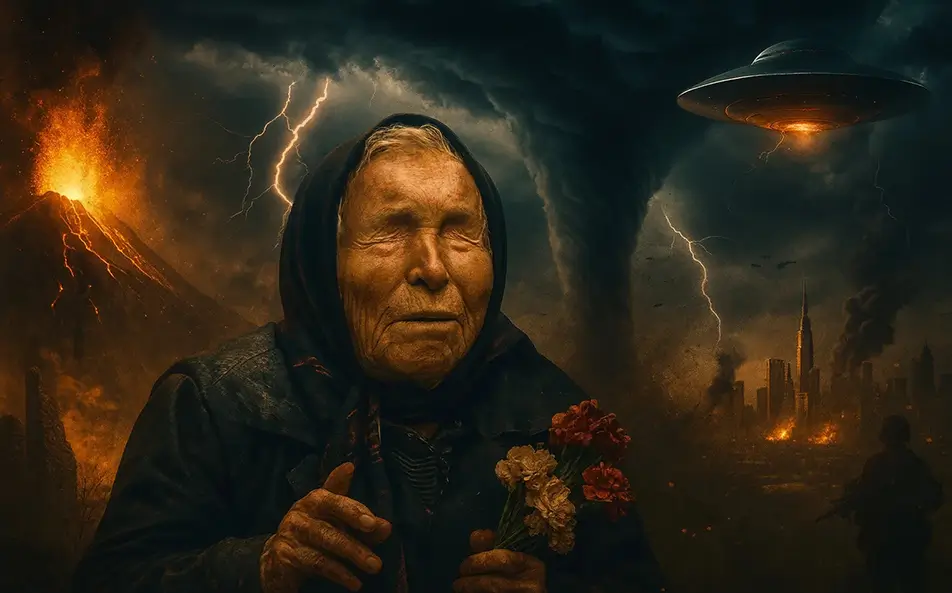
Much of Baba Vanga’s modern fame is driven by digital culture. A baba vanga predictions list circulates widely online, often presented without context or historical background. Claims are simplified, dramatized, and shared rapidly, while uncertainty is rarely mentioned.
This repetition creates familiarity, and familiarity can be mistaken for truth. Over time, prophecy becomes content, and content becomes belief.
Prophecies gain power during periods of instability. Economic pressure, war, climate anxiety, and rapid technological change all contribute to a sense that the world is approaching a turning point.
In such moments, predictions offer structure. They turn chaos into narrative and fear into expectation. That is why Baba Vanga’s story returns whenever uncertainty dominates headlines.
Researchers and historians caution against treating these predictions as factual forecasts. Many claims attributed to Baba Vanga surfaced only after major events occurred, raising questions about retroactive interpretation.
Still, belief does not rely solely on evidence. Cultural memory, repetition, and emotional resonance often matter more than proof. That is why prophecies endure even when their origins are unclear.
The second and final mention of baba vanga predictions reflects this balance - they persist not because they are verified, but because they resonate.
In the end, these stories say more about us than about the future. People are drawn to them because they echo what we already worry about. The idea of a global war taps into fears about loss and destruction, while talk of alien contact comes from curiosity - the urge to know if there is something more beyond our own world.
Whether the predictions ever mean anything or not, the reason they keep coming back is simple. They speak to emotions people already carry. Fear, hope, and curiosity all mix together, and stories like these give those feelings a place to sit.
At the end of the day, nothing about the future is fixed. Things don’t happen because someone once predicted them. They happen because people make choices - good ones, bad ones, and sometimes careless ones. Wars start because leaders decide to go that way. Discoveries happen because someone keeps working, testing, and failing until something finally works.
It’s fine to read stories like these out of curiosity. Most people do. But curiosity doesn’t have to turn into fear. Taking a pause, stepping back, and keeping a little distance from dramatic claims helps. The future isn’t waiting to happen it’s being shaped slowly, every day, by real decisions in the real world.
The United Indian examines belief, culture, and global narratives with context and restraint. We explore why certain stories endure - and what they reveal about the times we live in.
Everything you need to know
They tend to resurface when the world feels unstable. During times of war, economic stress, or rapid change, people look for explanations and patterns. Her name returns because it offers a sense real or imagined - that someone once warned us.
There is no written record from her directly stating that. Most claims come from later interpretations and retellings. Over time, vague statements have been linked to specific events and dates, which makes them feel more precise than they originally were.
Because science has changed the conversation. Governments now acknowledge unexplained aerial sightings, and astronomers regularly discover planets that could support life. That doesn’t confirm aliens, but it makes the idea feel less like fantasy than it once did.
Concern is natural, but fear may not be useful. Wars begin through political decisions, and discoveries happen through research, not prophecy. These stories are better viewed as reflections of anxiety rather than forecasts.
They reveal how humans respond to uncertainty. When the future feels unclear, we search for meaning in prophecy. The predictions endure not because they are proven, but because they resonate emotionally.
#weareunited
We respect your privacy. Unsubscribe at any time. Privacy Policy
Jan 16, 2026
TUI Staff
Jan 15, 2026
TUI Staff
Jan 14, 2026
TUI Staff
Jan 09, 2026
TUI Staff
Stay Tuned with The United Indian!
Our news blog is dedicated to sharing valuable and pertinent content for Indian citizens. Our blog news covering a wide range of categories including technology, environment, government & economy ensures that you stay informed about the topics that matter most. Follow The United Indian to never miss out on the latest trending news in India.



Comments (0)
Be the first to comment!