
Sharad Pawar Breaks Silence: Says He Was Not Consulted on Sunetra Pawar’s Oath-Taking as Deputy CM
A Sudden Political Shock
 IN
Tue, Oct 13, 2026 | 01:56 PM IST
IN
Tue, Oct 13, 2026 | 01:56 PM IST

For several days after the oath-taking in Mumbai, there was no reaction from Sharad Pawar. No statement, no clarification, no attempt to shape the conversation. In Maharashtra politics, that kind of silence rarely means confusion. More often, it means calculation.
The swearing-in of Sunetra Pawar as deputy chief minister immediately triggered speculation. Not only because of the post, but because of the surname. Observers waited for a response from the party’s most recognisable figure, unsure whether it would be supportive, critical, or carefully ambiguous.
What eventually came was short and almost clinical. The decision, Pawar said, was taken by her party. He was not consulted. That was the full stop.
In the days before Pawar spoke, different interpretations filled the gap. Some assumed quiet approval. Others believed discomfort was being masked by restraint. A few suggested internal negotiations were still unfolding behind closed doors.
But Pawar waited until the noise settled. By then, the oath-taking had already become a fact rather than a flashpoint. When he finally spoke, the timing ensured his words would be read as a clarification, not an intervention.
This is a familiar Pawar tactic. Speak late. Say little. Let others reveal their positions first.
The statement did not challenge the appointment. It did not praise it either. It avoided emotional language completely. Most importantly, it did not personalise the issue.
By emphasising that he was not consulted, Pawar placed distance between himself and the decision. That distance served two purposes. First, it made clear that the move was organisational, not familial. Second, it signalled that authority within the party has shifted in ways that no longer require his endorsement.
The second time Sharad Pawar’s name entered the conversation publicly, it was already in a different role not as a decision-maker, but as a commentator on a decision taken elsewhere.
Maharashtra has seen decades of politics where family and party often blur into each other. Pawar’s response seemed designed to resist that overlap. By refusing to frame the appointment in personal terms, he removed himself from both ownership and opposition.
That separation matters. It protects him from being pulled into internal debates that could harden positions prematurely. It also allows him to remain accessible to multiple factions without appearing aligned. In a fractured political environment, that neutrality has value.
Although Pawar avoided naming names, the broader context was impossible to miss. The realignment involving Ajit Pawar has reshaped equations within the party and the state. Pawar’s statement sat within that reality without acknowledging it directly.
This is another pattern. When tensions are obvious, Pawar rarely spells them out. He lets others do that work, while he focuses on positioning himself above the immediate dispute. The result is often more durable.
It would be wrong to read the statement as retreat. Pawar has not withdrawn from public life. But his role has changed. He is no longer the person every major move runs through. And by saying so openly, he normalised that shift.
This matters because it resets expectations. It tells both supporters and critics that future decisions may emerge without his involvement and that such outcomes should not automatically be read as approval or dissent. In Maharashtra politics, clarity of role is often more important than clarity of opinion.
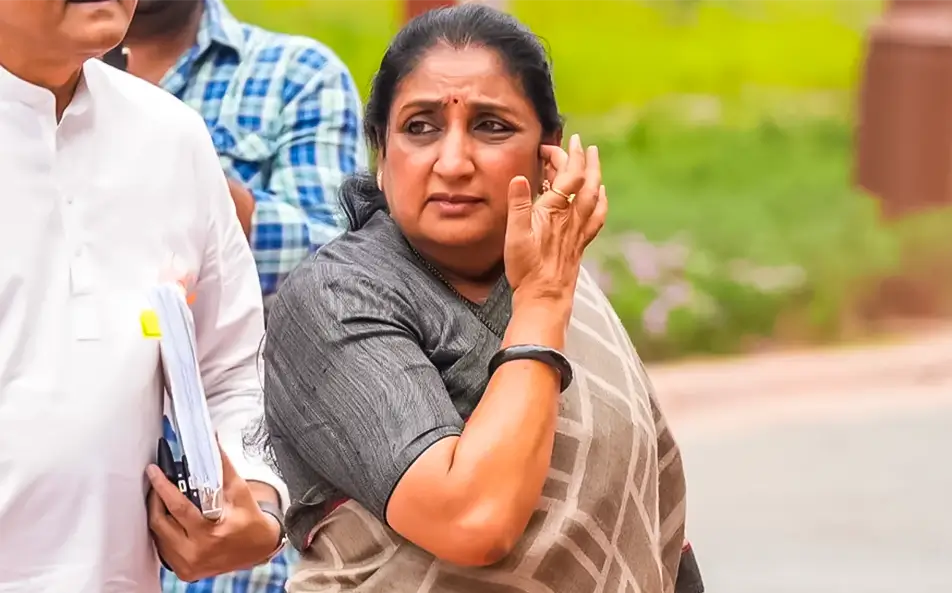
The appointment of a deputy chief minister of maharashtra always carries symbolic weight. These are not just administrative roles; they shape alliances, governance priorities, and electoral narratives.
By choosing distance, Pawar preserved his ability to respond to consequences rather than be tied to origins. If the move stabilises governance, he is not excluded from credit. If it creates friction, he is not responsible for it.
That is a seasoned politician’s instinct.
The first reaction was silence. The second was restraint. Together, they formed a complete response. The second and final mention of Sunetra Pawar belongs here not as an individual, but as a marker of how political identities now operate independently of older hierarchies. This is the quiet story beneath the louder headlines.
At The United Indian, we read Pawar’s statement not as disengagement, but as adaptation. In a political landscape that rewards speed and spectacle, he chose delay and minimalism. That choice reveals something important about where power sits today in Maharashtra politics and how veteran leaders adjust when they no longer sit at its centre.
Sometimes, saying less is not weakness. It is an acknowledgment that the system has moved and that you know exactly where you stand within it.
Everything you need to know
Because reacting immediately would have turned the issue into a confrontation. Waiting allowed him to understand how the political landscape was settling before placing his position carefully.
He was drawing a boundary. The statement signals that the decision was taken within party processes without his direct involvement, and that he does not want to be seen as owning it.
Not openly. It neither endorses nor rejects the move. That ambiguity appears intentional, leaving room for flexibility in future political developments.
Yes, inevitably. That is why Pawar’s effort to frame it as an institutional decision rather than a personal one was significant.
Recent political shifts involving him form the backdrop of this event, even if not mentioned directly. Pawar’s silence on that front keeps the focus narrow.


Oct 08, 2026
TUI Staff
Oct 06, 2026
TUI Staff
Sep 23, 2026
TUI Staff
Oct 09, 2026
TUI Staff
Oct 09, 2026
TUI Staff
Oct 09, 2026
TUI Staff
Oct 09, 2026
TUI Staff

Stay informed with independent, fact-checked journalism on technology, environment, government, economy and more. India’s most trusted digital news platform.


Comments (0)
Be the first to comment!