
Economic Survey Findings: Higher GST and Ad Restrictions on Ultra Processed Food to Address Obesity
Health Meets Policy
 IN
Tue, Oct 13, 2026 | 03:39 PM IST
IN
Tue, Oct 13, 2026 | 03:39 PM IST

For a long time, India’s food debate was about quantity. Do people have enough to eat? Is food affordable? Can supply chains keep up with demand? Somewhere along the way, those questions began to change. Now, the concern is not just what people eat, but what eating habits are doing to the country’s health.
That shift shows up clearly in the latest economic survey.
The document does not shout. It does not announce bans or taxes outright. But its language suggests unease. It talks about changing diets, rising health problems, and the growing presence of ultra processed food in everyday life. It also hints that the state may no longer be comfortable leaving this issue entirely to personal choice.
Walk through any city, and the change is obvious. Quick meals, ready mixes, flavoured drinks, packaged snacks. What was once occasional has become routine. Cooking time has shrunk. Marketing has grown sharper. This didn’t happen overnight. Urbanisation, working hours, and convenience all played a role. But the result is now visible in data. Health indicators that once worried richer countries are becoming common here too.
The survey links these patterns directly to rising obesity, especially among younger age groups. It does not frame this as a moral failure. It frames it as an outcome of environment and exposure.
One part of the survey that stands out is its focus on marketing. Particularly, marketing aimed at children. The argument is straightforward. Children don’t choose food in a vacuum. Bright packaging, cartoon mascots, celebrity faces - these shape preferences early. By the time health awareness arrives, habits are already formed.
The survey suggests that restrictions on advertising for certain food categories, including products meant for infants and toddlers, may be necessary. This is not a new idea globally, but it is still uncomfortable territory in India, where food companies enjoy wide creative freedom.
Then there is the GST proposal. The idea of placing certain foods in the highest tax bracket is bound to provoke resistance. Taxes are blunt tools. They hit wallets, not intentions. Supporters argue that price signals matter. If something costs more, people consume it less, especially over time. Critics say food is not tobacco, and consumption patterns are more complex.
The survey does not list items. But public discussion often drifts to familiar examples instant meals, packaged snacks, fast fixes like noodles symbols of convenience that have quietly become staples.
Food companies are unlikely to accept broad labels easily. Many point out that processing is not a single category. Some processed foods improve safety and shelf life. Others blur lines between necessity and indulgence.
There is also the employment question. Food manufacturing supports millions. Any regulatory shift has ripple effects farmers, distributors and retailers.
The survey acknowledges these realities indirectly. It does not argue for sudden action. It suggests direction.
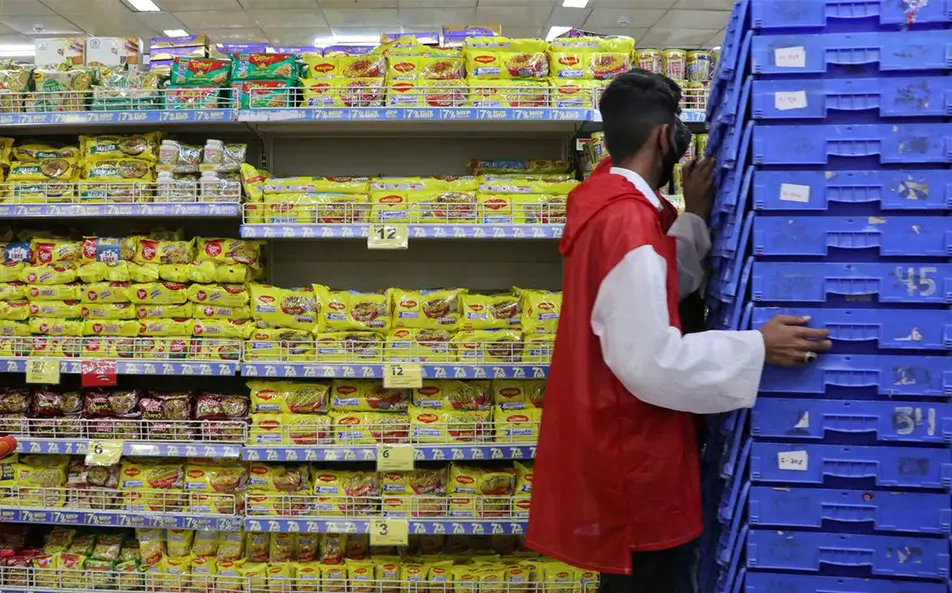
What makes the document interesting is that it treats diet as a policy issue, not just a lifestyle one. That is a subtle but important change. Nutrition is no longer framed only as an awareness problem. It is being connected to economics, productivity, and long-term healthcare costs. In other words, poor diets are being treated as future liabilities.
Surveys often prepare the ground. They test ideas, measure reaction, soften resistance. Observers see the timing as significant, especially with Budget 2026 on the horizon. Nothing announced yet. No rates changed. No bans notified. But the signal is there. The second and final mention of economic survey fits here as a marker of intent rather than instruction.
Similarly, the second and final mention of ultra processed food belongs here not as a villain, but as a category policymakers are clearly uneasy about.
India has tried gentle nudges before. Labels. Advisories. Campaigns. Results have been mixed. Stronger steps will invite backlash. From industry. From consumers. Possibly from states.
But doing nothing also has a cost. Healthcare systems already feel pressure. Preventable conditions consume resources that could go elsewhere. That tension between intervention and choice - sits at the heart of this debate.
At The United Indian, we see this moment as part of a broader shift. Policy is no longer just about growth numbers. It is beginning to ask uncomfortable questions about how growth changes lives. Food choices sit at the crossroads of habit, affordability, and daily routine. Whether India chooses taxes, restrictions, or slower reforms, the conversation itself is revealing. What people eat is no longer invisible to the state. And that may be the biggest change of all.
Everything you need to know
Because health problems linked to diet are becoming harder to ignore. It’s no longer just a medical issue - it’s starting to affect productivity and public spending.
On its own, maybe not much. But price changes often influence behaviour slowly, especially when combined with other measures.
Some industry voices think so. They argue that not all processing is harmful and that lifestyle choices are more complicated than labels suggest.
Because they’ve become everyday items rather than occasional ones. Their popularity makes them an easy reference point in discussions about changing diets.
That’s a real concern. Any tax-based approach has to be designed carefully to avoid hurting those with limited food choices.


Oct 08, 2026
TUI Staff
Oct 06, 2026
TUI Staff
Sep 23, 2026
TUI Staff
Oct 13, 2026
TUI Staff
Oct 09, 2026
TUI Staff
Oct 09, 2026
TUI Staff

Stay informed with independent, fact-checked journalism on technology, environment, government, economy and more. India’s most trusted digital news platform.


Comments (0)
Be the first to comment!