
India and Trump Board of Peace for Gaza: Why New Delhi’s Silence Matters as a Global Role Beckons
Diplomacy At Crossroads
 IN
Thu, Oct 15, 2026 | 11:26 PM IST
IN
Thu, Oct 15, 2026 | 11:26 PM IST

India has received a quiet invitation that could pull it into one of the most sensitive diplomatic conversations around Gaza. The United States has asked New Delhi to join a proposed interim body - a Board of Peace for Gaza that would be tasked with overseeing governance arrangements in the territory after the fighting. Those familiar with the discussions say India has not yet given an answer.
The timing is awkward. Gaza’s future remains uncertain, the region is tense, and any outside role is bound to be closely watched. For India, which has usually tried to keep a careful balance in West Asia, the decision is not an easy one. It is less about optics and more about whether stepping in now could lock New Delhi into a long and politically fraught commitment.
The proposed board is a central pillar of the current U.S. administration’s peace framework. It is intended to supervise a transitional governance committee composed of independent experts who would manage civilian affairs in Gaza after active hostilities subside. The goal, at least on paper, is to separate governance from armed groups while laying groundwork for political reconstruction.
Washington’s outreach to select countries reflects an attempt to lend international legitimacy to the plan. The invitation extended to India signals recognition of its growing diplomatic profile and its ability to engage across competing regional interests.
This is also where caution begins to matter.
When it comes to West Asia, India has usually played it safe. It has stayed away from taking clear sides, choosing instead to keep working relationships with everyone who matters. That approach has been driven by hard realities - the need for stability in the region, dependence on energy imports, the presence of millions of Indians living and working there, and a basic commitment to humanitarian concerns.
Seen from that lens, the idea of India joining a Board of Peace for Gaza is complicated. Taking part could help project India as a country willing to step up and contribute beyond statements. But it could also mean getting pulled deeper into a conflict that is still unresolved, highly emotional, and politically divisive with risks that are difficult to predict or control.
Silence, for now, may be deliberate.
It is hard to talk about governing Gaza after the war without dealing with the conflict itself. The ground situation is still tense, and there is little real agreement among international players on what should happen next. Different plans for Gaza’s future are competing with one another, and that has made even temporary arrangements a source of friction.
India has so far kept to familiar ground, calling for calm, humanitarian access, and dialogue. Getting involved in any form of governance oversight would be a different step altogether. It would move India from issuing statements to taking on a direct role one that carries influence, but also clear diplomatic and political risks.
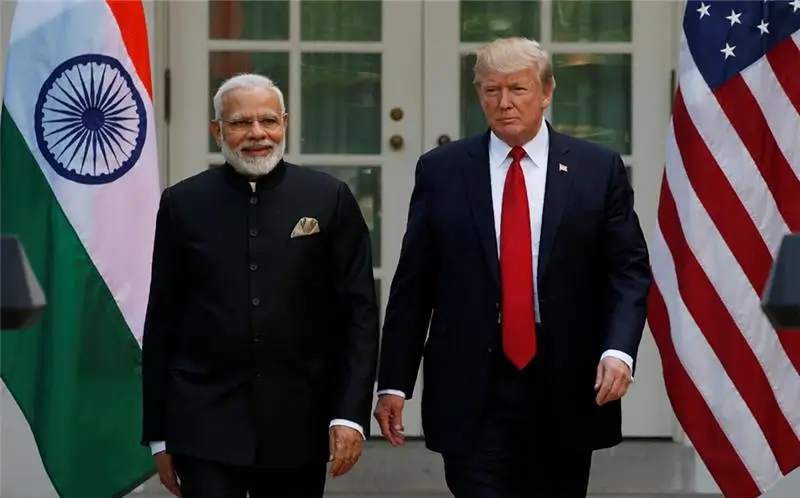
From Washington’s perspective, India brings credibility without colonial baggage. It is viewed as a country that engages without imposing and maintains relations across ideological divides. In the context of the U.S. peace plan for Gaza, India’s presence could help broaden acceptance beyond traditional Western partners.
At the same time, the invitation reflects a broader trend of India being consulted on global issues that extend well beyond South Asia. Whether India chooses to step into that role here will depend on how clearly the board’s mandate, authority, and neutrality are defined.
There is no shortage of voices arguing both sides. Supporters of engagement suggest that participation would allow India to influence outcomes quietly while contributing to stability. Critics warn that unclear authority structures and unresolved political questions could leave participants exposed without meaningful leverage.
India’s foreign policy has, in recent years, favoured strategic autonomy over symbolic alignment. Any decision related to the rump Board of Peace for Gaza will likely be tested against that principle.
Other invited nations are also weighing their positions, aware that participation could be interpreted differently by different audiences. For India, reactions in the Arab world, Israel, and among domestic observers will all factor into the decision.
New Delhi is acutely aware that diplomatic moves in West Asia rarely remain compartmentalised. A step forward in one forum can complicate equations elsewhere, particularly when conflicts remain unresolved.
India’s lack of an immediate response should not be mistaken for hesitation alone. Diplomatic silence often signals internal consultation rather than indecision. Officials are likely assessing legal frameworks, exit options, and the practical limits of influence before committing to any formal role.
The timing of the invitation also matters. With multiple global crises competing for attention, India must consider where its engagement can be most effective and least constraining.
Whatever choice India makes will resonate beyond this specific proposal. Acceptance would mark a more direct role in conflict-related governance structures. Declining would reinforce India’s preference for engagement without formal entanglement.
Either way, the invitation underscores how India is increasingly viewed-as a country whose participation carries weight even in regions far from its immediate neighbourhood.
The second mention of the rump Board of Peace for Gaza thus becomes less about the body itself and more about what India’s response reveals about its evolving global posture.
For now, the matter remains open. No official statement has been issued, and deliberations are expected to continue behind closed doors. As the situation in Gaza evolves, the relevance and shape of the proposed board may also change.
India’s eventual response, whenever it comes, will be read carefully-not only for what it says about Gaza, but for what it signals about India’s approach to global responsibility.
The United Indian examines geopolitical and diplomatic developments with an emphasis on context, balance, and long-term implications. Our reporting aims to explain not just decisions, but the reasoning behind them.
Everything you need to know
It is a U.S.-backed initiative aimed at overseeing a temporary governance structure in Gaza, led by independent experts, until a longer-term political arrangement is decided.
India is seen as a credible international actor with balanced ties across West Asia and a history of engaging without direct military or political intervention.
No official response has been issued so far. Sources indicate that New Delhi is still assessing the implications of participation.
Participation could enhance India’s global diplomatic profile and allow it to contribute to post-conflict governance discussions without taking sides.
The main concern is the risk of deeper entanglement in a highly volatile and unresolved conflict, which could complicate India’s carefully balanced regional relationships.


Oct 15, 2026
TUI Staff
Oct 15, 2026
TUI Staff
Oct 14, 2026
TUI Staff
Oct 15, 2026
TUI Staff
Oct 15, 2026
TUI Staff
Oct 15, 2026
TUI Staff
Oct 14, 2026
TUI Staff

Stay informed with independent, fact-checked journalism on technology, environment, government, economy and more. India’s most trusted digital news platform.


Comments (0)
Be the first to comment!